

Why stress makes it harder to think
A deadline moves up.
Your phone lights up.
Three messages arrive while you're trying to finish something that actually requires thought.
Nothing dangerous is happening. You know that.
And yet suddenly the task that felt simple ten minutes ago feels strangely harder. You reread the same sentence. You lose your place. You become more reactive and less deliberate.
It's easy to describe this as being "distracted." But stress can change cognition in measurable ways.
And understanding that distinction leads to a much more useful question than:
How do I get rid of stress?
How do I stay clear when life gets demanding?
Stress is supposed to happen
Stress is not inherently pathological.
Your stress response exists because rapidly mobilizing attention, energy and behavior can be useful. A difficult presentation. A hard workout. A competitive event. A sudden problem. A looming deadline.
In situations like these, the brain and body shift resources toward dealing with an immediate demand. That response is adaptive.
The problem is that modern life can ask for the response repeatedly, without providing a clean moment when the demand is actually over.
Researchers sometimes use the concept of allostasis to describe the body's ability to adjust its physiology in response to changing demands. The accumulated physiological cost of repeatedly making those adjustments is known as allostatic load.[1]
The goal therefore isn't a life without stress. That would be neither realistic nor necessarily desirable. The goal is respond → adapt → recover, rather than respond → respond → respond → never fully reset.
Respond
Adapt
Recover
Resilience isn't the absence of stress. It's the ability to move through the cycle.
Stress can change executive function
Some of the most interesting research on stress has nothing to do with whether someone reports "feeling stressed." It asks what happens to cognition.
A meta-analysis examining acute stress and the brain's core executive functions found that stress impaired working memory and cognitive flexibility, while its effects on inhibition were more complex.[2]
These aren't abstract neuroscience terms. They describe abilities you use constantly.
Working memory
Holding information in mind while doing something with it. Reading a complicated email while remembering the context. Doing mental arithmetic. Following an argument. Keeping track of several moving pieces at once.
Cognitive flexibility
Changing strategies when the situation changes. Seeing a problem another way. Switching between tasks without mentally getting stuck. Adapting when the original plan stops working.
Reviews of chronic-stress research similarly describe effects on prefrontal executive processes involving working memory, attention, inhibition and cognitive flexibility.[3]
Pressure doesn't merely change how you feel. It can change how you think.
Conceptual illustrations of three core executive functions. Toggle demand to see how the research describes the pattern.
Working memory
Holding information in mind while using it.
Cognitive flexibility
Changing strategy when the situation changes.
Inhibition
Stress effects on inhibition are more nuanced than a simple impairment.
Conceptual illustration based on Shields et al. 2016. Not a depiction of neurons.

The internet has turned stress into a cortisol story
Search for advice about stress and one molecule quickly dominates the conversation: cortisol.
Cortisol matters. But stress is not simply "high cortisol."
The stress response involves interacting neural, endocrine, autonomic and immune systems. In fact, the meta-analysis of acute stress and executive function found that the cognitive effects of stress could not simply be recreated by looking at cortisol administration alone.[2]
That matters because a supplement marketed as "lower your cortisol" may sound scientific while radically oversimplifying the actual biology.
Healthy resilience is not about suppressing one hormone. It's about maintaining the ability to respond appropriately and then return toward baseline when the demand passes.
The goal isn't less biology. It's better regulation.
Respond when needed. Stay cognitively effective. Recover afterward.
Calm and focus are not opposites
The wellness world often treats calm and performance as opposite objectives. One category promises relaxation. Another promises stimulation.
But high-level performance often requires something in between.
You need enough activation to care. Enough alertness to respond. Enough calm to keep irrelevant information from consuming your attention. And enough flexibility to change direction when circumstances change.
That is why calm focus is a more useful concept than simply "relaxation." It isn't sedation. It isn't indifference. It's the ability to remain engaged without feeling unnecessarily overactivated.
Calm enough to think. Alert enough to act.
Conceptual illustration. Individual optimal arousal varies by person and task.
So where does nutrition fit?
Sleep comes first. Exercise matters.
So do workload, relationships, recovery time, physical health and the dozens of other variables that determine whether your nervous system is operating from a good baseline. No supplement replaces those things.
But nutrition influences the biological environment in which those systems operate. And several nutritional compounds have been studied specifically at the intersection of relaxation, attention, mental fatigue, nervous-system function and recovery.
The evidence is not equally strong for every ingredient. That's where things become interesting.
L-Theanine: perhaps the clearest "calm focus" ingredient
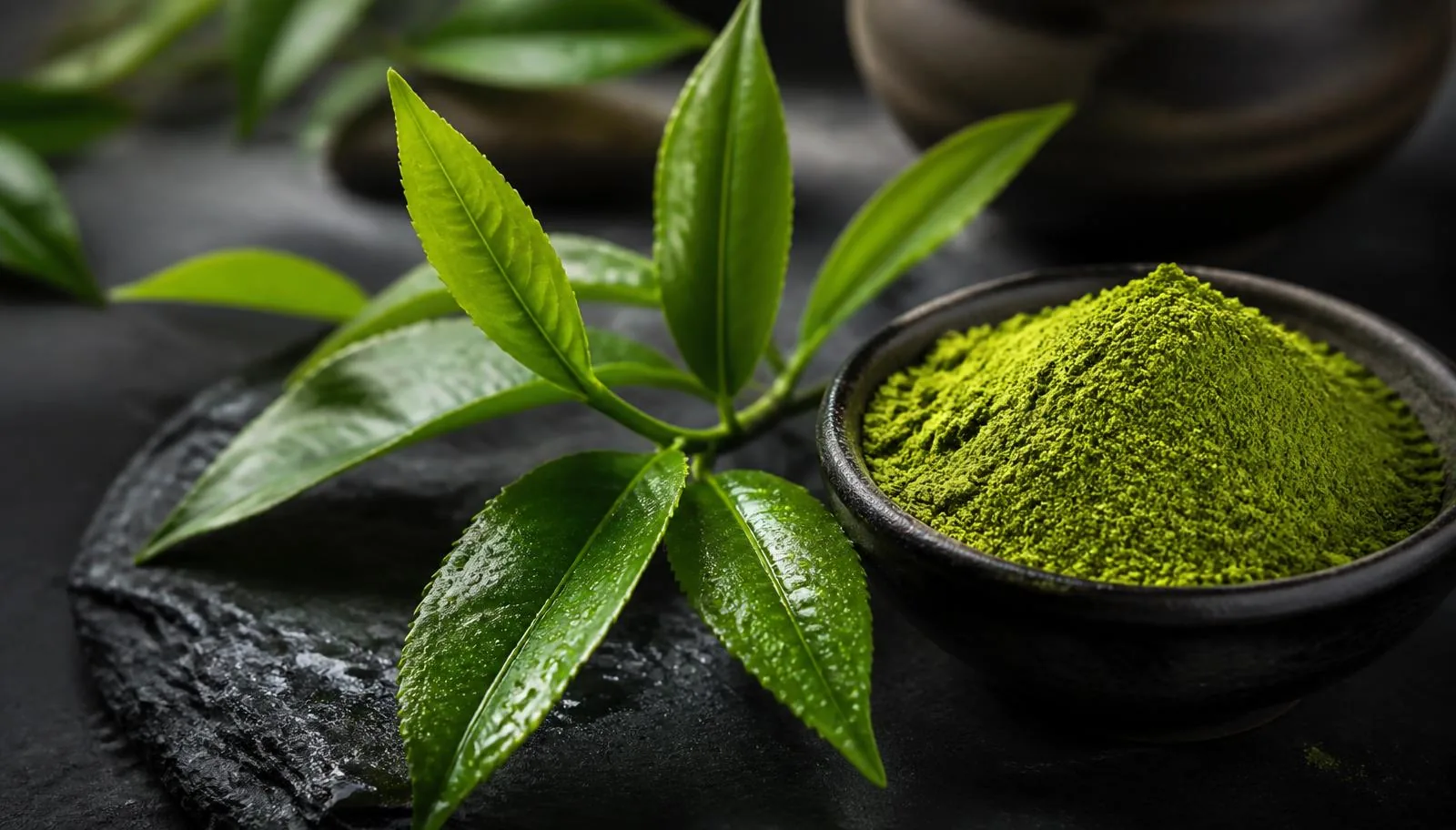
L-Theanine is an amino acid naturally found in tea.
Unlike caffeine, it isn't primarily used to increase stimulation. Instead, human research has examined whether it can influence relaxation, stress-related measures and aspects of attention.
In a randomized, double-blind, placebo-controlled crossover study, 30 healthy adults consumed 200 mg of L-Theanine daily for four weeks. Compared with placebo, researchers reported differences in several stress-related and sleep measures, along with selected measures of verbal fluency and executive function.[4]
A separate double-blind crossover study tested 100 mg, 200 mg and 400 mg doses in healthy young adults. After correcting for placebo effects, researchers found faster simple reaction time following the 100 mg and 200 mg doses, although more complex sustained-attention and inhibitory-control measures were not significantly improved.[5]
A systematic review of randomized human studies concluded that daily supplementation in the 200–400 mg range may help manage stress responses in people exposed to stressful conditions, while emphasizing the need for larger and longer trials.[6]
- 4 weeks
- 200 mg/day
Differences in several stress-related, sleep and cognitive measures in healthy adults.[4]
150 mg L-Theanine
The exact NOVOS Core dose/formula has been clinically studied, but not for calm, stress or attention outcomes.
Human studies suggest L-Theanine can influence the intersection between relaxation and selected aspects of attention.
Rhodiola: performance when the demand is high
Rhodiola rosea is a botanical traditionally classified as an adaptogen. Its clinical literature has frequently focused on a particularly relevant question: what happens to performance when people are tired or under stress?
In a randomized placebo-controlled study involving 161 military cadets under conditions of fatigue and stress, a standardized Rhodiola extract improved a composite measure of mental work capacity relative to placebo.[7]
Another randomized double-blind trial involved 60 adults with clinically defined stress-related fatigue. After four weeks, the standardized Rhodiola group showed differences versus placebo in measures including fatigue and selected attention outcomes.[8]

Rhodiola has promising human evidence for mental stamina and performance under stress.
Magnesium: less exciting marketing. More fundamental biology.
Magnesium is easy to overlook because it isn't exotic. That would be a mistake.
Magnesium is required for hundreds of enzymatic processes. It is involved in ATP production and glycolysis and contributes to the transport of ions across cell membranes that is necessary for normal nerve signaling and muscle function.[10]
Those functions are established nutritional physiology.
What about "stress"? A systematic review examining magnesium supplementation and subjective anxiety/stress outcomes found suggestive evidence.[11]
So magnesium deserves a place in a stress-resilience conversation.
304 mg
Magnesium · 72% Daily Value
as Magnesium Malate
Established roles
- Normal nerve function
- Muscle function
- Cellular energy production
Stress-specific supplementation evidence
Suggestive
It is foundational nervous-system and energy biology.
Glycine: what happens tonight changes tomorrow
Stress resilience isn't only about what happens during the demanding moment. It is also about whether you recover afterward. That makes sleep and next-day function part of the same conversation.
Glycine is an amino acid involved throughout human biology and also acts as a neurotransmitter. Small human studies have investigated glycine before sleep.
In one study, healthy volunteers restricted their sleep by 25% for three consecutive nights and consumed 3 g of glycine or placebo before bed. The glycine condition was associated with lower subjective fatigue and improved performance on a psychomotor-vigilance measure the following day.[12]

- Next-day measures
- Fatigue ↓
Lower subjective fatigue and improved psychomotor vigilance.
Glycine has intriguing human research connecting nighttime intake with recovery and next-day function.
And then there's lithium
Lithium is different from the other ingredients in this story. At prescription doses, lithium is a well-established medicine. That is not what we're discussing here.
Lithium is also a naturally occurring mineral found in water and food at trace levels. That fact has generated a separate field of research asking whether much lower long-term exposures may be relevant to brain health.
A 2024 systematic review examined five observational studies relating trace lithium concentrations in drinking water to dementia incidence or mortality. Several reported associations between higher trace exposure and lower dementia outcomes, although results became weaker or disappeared after adjustment for confounding variables in some studies.[13]
More recently, a 2026 randomized pilot trial tested low-dose prescription lithium carbonate over two years in older adults with mild cognitive impairment. None of its six prespecified coprimary outcomes met the study's significance threshold, although exploratory findings provided estimates that researchers considered useful for future trials.[14]
That is what emerging science looks like. Interesting. Mechanistically plausible. Worth investigating.

Micro-dosed lithium
1 mg elemental lithium
NOVOS Core contains a trace nutritional dose far below prescription lithium dosing. Lithium is included as part of Core's multi-pathway approach to supporting long-term brain health and neuronal resilience.
What the evidence does not establish
The 1 mg dose in NOVOS Core has not been clinically demonstrated to improve mood or cognition, or to prevent neurodegenerative disease.
Calm focus isn't one pathway.
L-Theanine
Calm attention
150 mg
Rhodiola
Mental stamina + stress adaptation
300 mg
Magnesium
Nerve function + cellular energy
304 mg
Glycine
Recovery
2 g
Micro-dosed lithium
Long-term brain-health research · 1 mg elemental lithium
Different biology. Different evidence. One larger system.
Stress and longevity are connected, but the story is complicated
There is another reason resilience belongs in a longevity conversation.
When physiological stress responses are repeatedly activated without adequate recovery, researchers describe the cumulative multisystem burden as allostatic load. Across decades of research, allostatic-load measures have been associated with physical health, mental health and mortality.[1]
More recent work is examining how chronic psychological stress interacts with biological mechanisms associated with aging, including inflammatory signaling, mitochondria, epigenetics and cellular senescence.
But the evidence is not simple enough to say "stress makes you age X years faster." Studies using epigenetic aging clocks, for example, have produced mixed results.
That's worth emphasizing. Longevity science becomes less credible when every stressor is converted into an exact number of "years of aging."
Nervous system
Signaling & arousal
Cardiovascular system
Vessels & pressure
Metabolic system
Fuel & energy
Immune / inflammatory signaling
Defense & repair
Recovery / sleep
Reset & consolidation
Allostatic load
Multisystem physiological burden
Conceptual model of allostatic load. Juster, McEwen & Lupien; Beckie 2012.
The ability to adapt and recover is part of healthy aging biology.
A longevity formula unusually well aligned with a high-pressure life.
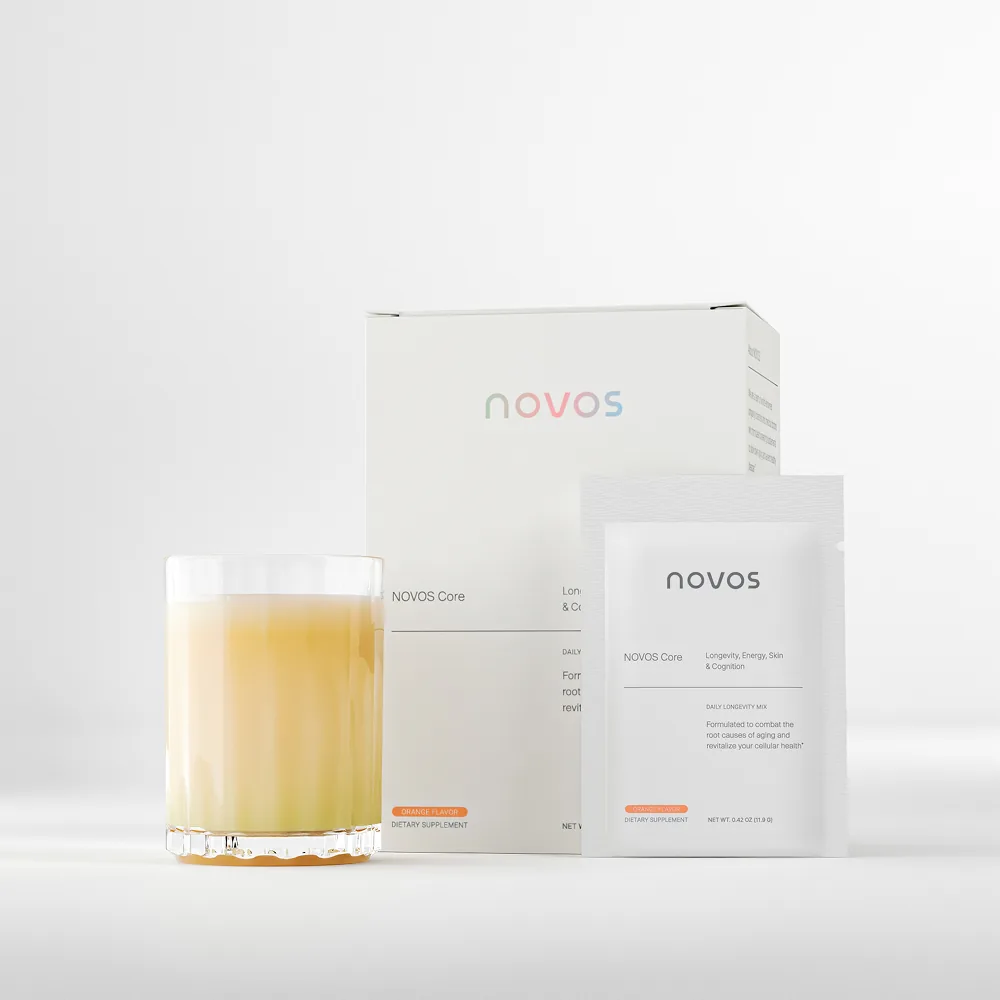
NOVOS Core wasn't originally created as a stress supplement.
It was designed around a broader idea:
aging is driven by multiple interacting biological processes, so supporting healthy aging requires thinking beyond a single pathway.
The finished formula contains 12 longevity ingredients. Among them are:
- 150 mg L-Theanine
- 300 mg standardized Rhodiola Rosea
- 304 mg Magnesium
- 2 g Glycine
- 1 mg elemental Lithium
Those happen to create an unusual overlap with the biology discussed in this article. But Core goes considerably further.
Its remaining ingredients were selected around biological processes involved in cellular energy, connective tissue, cellular resilience, inflammatory balance and other systems associated with healthy aging.
That is what separates the idea from a traditional "stress supplement."
The immediate goal is not to sedate you. The long-term goal is not simply to stimulate you.
It's a broader daily foundation.
These statements have not been evaluated by the Food and Drug Administration. This product is not intended to diagnose, treat, cure, or prevent any disease.
The unusual part: the actual formula has been tested
Many supplement formulations are built from individually researched ingredients. The finished combination is never studied.
NOVOS Core has taken a different path.
The complete formulation was evaluated in a randomized, double-blind, placebo-controlled human study conducted by researchers at the University of Surrey. The completed study enrolled 61 generally healthy adults aged 40+ and evaluated the formula for up to six months.
Finished-formula human research
- 61
- Randomized participants
- 40+
- Age
- 6 mo
- Duration
What was tested
- ✓ Endothelial function
- ✓ Arterial flexibility
- ✓ Blood pressure
- ✓ Additional vascular / aging biomarkers
Core's results vs. other interventions
Sustained FMD improvement (%)
Each 1% improvement in flow-mediated dilation has been associated with lower future cardiovascular risk in epidemiological research.
Comparison values are drawn from published randomized trials and meta-analyses of other interventions in adult populations. These are not head-to-head trials.
ClinicalTrials.gov NCT06145087 · Completed · Manuscript under peer review. Stress, mood, focus, cognition and sleep were not trial endpoints.
These statements have not been evaluated by the Food and Drug Administration. This product is not intended to diagnose, treat, cure, or prevent any disease.
Those findings cannot simply be transferred to a claim that Core has been clinically proven for stress or cognition. But the trial answers a different and unusually important question:
Has the multi-ingredient formula people actually consume been subjected to randomized human testing, and does it work? In Core's case: yes.
What people notice is different from what a trial proves.

"I feel calm but with sharper clarity, and I'm noticeably less fatigued through the afternoon."

"I get through demanding days with more focus and less spillover."
"I sleep better and wake up feeling more like myself. That was unexpected."

"Steady energy without the jittery edge I get from coffee."
Customer reviews reflect individual self-reported experiences and are not clinical outcomes. Individual results vary. These statements have not been evaluated by the Food and Drug Administration. This product is not intended to diagnose, treat, cure, or prevent any disease.
The bottom line
Stress is not a flaw in the human system. It is part of the system.
The question is how effectively you move through it.
Human research shows that stress can change working memory, cognitive flexibility and other aspects of executive function. The nutritional evidence suggests that certain compounds may support different pieces of the calm-focus-recovery equation.
No single ingredient creates resilience. No drink replaces sleep. And no supplement removes the need to change a life that is chronically asking too much.
But supporting the biology that helps you remain clear, recover and stay capable is a rational part of a broader longevity strategy.
Because living longer matters more when you can still think clearly enough to use the time.
Stay sharp without living in overdrive.
NOVOS Core combines L-Theanine, Rhodiola Rosea, Magnesium, Glycine and micro-dosed Lithium with a broader 12-ingredient longevity formulation designed around the biological processes involved in healthy aging.
No caffeine. No proprietary blend. Every active dose disclosed.
These statements have not been evaluated by the Food and Drug Administration. This product is not intended to diagnose, treat, cure, or prevent any disease.
This article is for educational purposes only. Persistent or severe anxiety, depressed mood, cognitive changes, sleep disturbance, fatigue or other symptoms can have medical or psychological causes and should be discussed with a qualified healthcare professional. NOVOS Core is a dietary supplement and is not intended to diagnose, treat, cure or prevent anxiety disorders, depression, ADHD, bipolar disorder, insomnia, dementia or any other disease.
These statements have not been evaluated by the Food and Drug Administration. This product is not intended to diagnose, treat, cure, or prevent any disease.
References
- [1]
Juster RP, McEwen BS, Lupien SJ; Beckie TM.
Allostatic load biomarkers of chronic stress and impact on health and cognition; A systematic review of allostatic load, health, and health disparities.Neuroscience & Biobehavioral Reviews; Biological Research for Nursing. 2012.
- [2]
Shields GS, Sazma MA, Yonelinas AP.
The effects of acute stress on core executive functions: A meta-analysis and comparison with cortisol.Neuroscience & Biobehavioral Reviews. 2016;68:651–668.
- [3]
Girotti M, Adler SM, Bulin SE, et al.
Prefrontal cortex executive processes affected by stress in health and disease.Progress in Neuro-Psychopharmacology & Biological Psychiatry.
- [4]
Hidese S, Ogawa S, Ota M, et al.
Effects of L-Theanine Administration on Stress-Related Symptoms and Cognitive Functions in Healthy Adults: A Randomized Controlled Trial.Nutrients. 2019;11:2362.
- [5]
Kahathuduwa CN, et al.
Dose-response effect of L-theanine on psychomotor speed, sustained attention, and inhibitory control: a double-blind, placebo-controlled, crossover study.Nutritional Neuroscience.
- [6]
Williams JL, Everett JM, D'Cunha NM, et al.
The Effects of Green Tea Amino Acid L-Theanine Consumption on the Ability to Manage Stress and Anxiety Levels: a Systematic Review.Plant Foods for Human Nutrition. 2020;75:12–23.
- [7]
Shevtsov VA, Zholus BI, Shervarly VI, et al.
A randomized trial of two different doses of a SHR-5 Rhodiola rosea extract versus placebo and control of capacity for mental work.Phytomedicine. 2003;10:95–105.
- [8]
Olsson EMG, von Schéele B, Panossian AG.
A Randomised, Double-Blind, Placebo-Controlled, Parallel-Group Study of the Standardised Extract SHR-5 of the Roots of Rhodiola rosea in the Treatment of Subjects with Stress-Related Fatigue.Planta Medica. 2009;75:105–112.
- [9]
Ishaque S, Shamseer L, Bukutu C, Vohra S.
Rhodiola rosea for physical and mental fatigue: a systematic review.BMC Complementary Medicine and Therapies. 2012.
- [10]
NIH Office of Dietary Supplements.
Magnesium: Health Professional Fact Sheet.National Institutes of Health.
- [11]
Boyle NB, Lawton C, Dye L.
The Effects of Magnesium Supplementation on Subjective Anxiety and Stress: A Systematic Review.Nutrients. 2017;9:429.
- [12]
Bannai M, Kawai N, Ono K, et al.
The effects of glycine on subjective daytime performance in partially sleep-restricted healthy volunteers.Frontiers in Neurology. 2012;3:61.
- [13]
Fraiha-Pegado J, de Paula VJR, Alotaibi T, et al.
Trace lithium levels in drinking water and risk of dementia: a systematic review.International Journal of Bipolar Disorders. 2024;12:32.
- [14]
Gildengers AG, Ibrahim TS, Anderson SJ, et al.
Low-Dose Lithium for Mild Cognitive Impairment: A Pilot Randomized Clinical Trial.JAMA Neurology. 2026;83:310–319.
- [15]
University of Surrey (sponsor).
STAMINA Study: NOVOS Core versus placebo in healthy adults 40+ (randomized, double blind, placebo controlled, six months; n=61).ClinicalTrials.gov NCT06145087. Completed; manuscript under peer review. Stress, mood, focus, cognition and sleep were not endpoints.