


Rescuing Healthspan in Obese, Aged Mice: A Comparison between Multi-Ingredient Nutraceuticals and Senolytic Interventions
Clinically studied. Recommended by 2,000+ verified clinicians. 15M+ NOVOS servings enjoyed worldwide. 81% of NOVOS customers feel a difference within 2 weeks
LongevityAging ScienceAnimal Research
NOVOS Core increased median survival by about 18% in an under-peer-review study of aged male mice under metabolic stress. That does not conclude it extends human lifespan. But it raises a more important question for an industry built around the word “longevity”: how much evidence should that word require?

A C57BL/6J-type research mouse in a controlled laboratory housing environment.
There may be no word in consumer health having a bigger moment than “longevity.”
Longevity clinics. Longevity diets. Longevity molecules. Longevity powders. Longevity stacks. Longevity supplements.
Some of the products behind that word contain genuinely interesting compounds. Some ingredients have decades of laboratory research. Others affect molecular pathways that biologists believe are important to aging.
That science can be valuable.
But there is a gap hiding inside the language.
A compound being associated with aging biology is not the same thing as a finished product demonstrating an effect on aging. And twelve ingredients, each with an impressive list of citations, do not automatically become a proven longevity formula when they are combined in a packet.
Studies have found that combinations of longevity molecules can behave differently from their parts and even shorten lifespan, as we've covered here. An intervention can make perfect mechanistic sense and fail when tested in a living animal. Something that works in a mouse can fail in a person. Something that changes a molecular biomarker may never meaningfully change how an organ functions.
This is not a reason to dismiss longevity science. It is a reason to demand more of it.
Longevity should be an evidence standard, not just a product category.
CHRIS MIRABILE, FOUNDER & CEO OF NOVOS
The question, then, is not whether a supplement contains ingredients connected to longevity.
The harder question is: what happens when you actually test the intervention?
The word “longevity” has a standards problem
There is a common chain of reasoning in supplements.
Ingredient A affects pathway B. Pathway B has been implicated in aging. Therefore, a product containing Ingredient A is marketed for longevity.
Nothing about that argument is necessarily dishonest. But each step answers a different scientific question.
A cell-culture study tells us what may happen to cells under specific laboratory conditions. An ingredient trial tells us something about that ingredient. A biomarker study tells us something about that biomarker. An animal lifespan experiment asks whether an intervention changes survival in a living organism. And a randomized human trial asks whether the actual intervention changes a predefined outcome in people. And even within people, there are many fundamental questions, including whether it impacted a blood biomarker, or the actual organ's function.
These are not interchangeable forms of evidence. They are layers.
Each step answers a harder and more directly relevant question.
A product does not become scientifically stronger by blurring those layers together. It becomes stronger by climbing them.
As of 2026, after 7+ years of R&D, NOVOS has achieved all six layers of evidence, with additional research in progress.
Why lifespan experiments are a high bar
Scientists have been trying to identify interventions that extend mammalian lifespan for decades. One of the clearest examples is the National Institute on Aging’s Interventions Testing Program, or ITP.
The ITP was created specifically to test candidate interventions for effects on lifespan and healthspan in mice. It does not simply run one experiment in one laboratory. Compounds are tested using standardized protocols across three sites: the Jackson Laboratory, the University of Michigan, and the University of Texas Health Science Center at San Antonio.
Candidates are selected because researchers already have a scientific reason to think they might work. And yet the current ITP record is remarkably selective. Since the program began in 2002, the NIA reports 15 agents and 2 combinations that have significantly increased median lifespan.2
Identified by the NIA Interventions Testing Program as significantly increasing median mouse lifespan since 2002.
That distinction is important. We cannot place one NOVOS experiment beside an ITP experiment and call it a head-to-head comparison. They are different studies.
What the ITP does show is something more general: even interventions chosen specifically because scientists think they may extend lifespan often do not. Mechanistic promise is not the same thing as a survival result.
The successful list includes interventions such as rapamycin, acarbose, glycine, astaxanthin and several pharmaceuticals or experimental compounds. There are many more negative results in the program’s public record.
A longevity pathway is a hypothesis. Lifespan is an outcome.
CHRIS MIRABILE, FOUNDER & CEO OF NOVOS
Why test mice?
Humans are the species we care about. So why spend years studying mice?
Because the ultimate human longevity experiment is extraordinarily difficult. To prove that a nutritional intervention extends human lifespan, researchers would need very large groups of people, extraordinarily long follow-up, strong adherence, careful control of confounding variables, and decades of patience.
That does not mean human longevity science is impossible. It means researchers build evidence in stages.
Cells can reveal mechanisms. Animals allow researchers to study those mechanisms inside a complete organism. And mice have one particularly useful property: their lifespan is short enough that researchers can measure it directly.
A mouse lifespan study can therefore ask a question that a six-month human study cannot: did the treated animals actually survive longer?
Translation becomes more relevant as evidence moves toward humans, but direct lifespan experiments become dramatically harder.
The tradeoff is obvious. Mice are not small humans. Their metabolism differs. Their diseases differ. Their environment differs. And an intervention that extends mouse lifespan may do nothing of the sort in people.
Mouse lifespan is therefore meaningful preclinical evidence. It is not human proof.

The NOVOS Core mouse study
The new study was conducted by researchers including scientists at Newcastle University and is currently available as a preprint while undergoing peer review.1
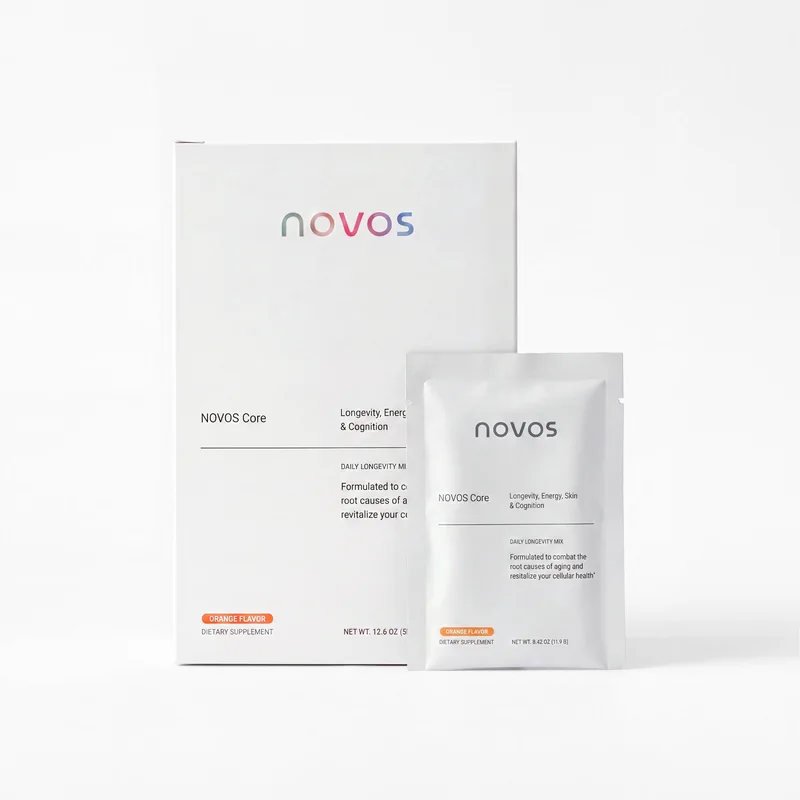
The intervention was not one isolated Core ingredient. It was the full, exact, patent-pending, twelve-component formulation that is sold to consumers:
The researchers compared three groups of naturally aged male C57BL/6J mice:
Baseline measurements: frailty, body weight, cognition.
Frailty, body weight and cognition assessed over time.
All groups followed to study endpoint.
Male C57BL/6J mice. Animal study. Not predictive of human lifespan.
Whether late-life intervention with the complete twelve-ingredient NOVOS Core formulation, or an experimental senolytic regimen, could affect survival and healthspan in naturally aged mice.
Naturally aged male C57BL/6J mice, with interventions beginning at 20 months of age under a soaked-food feeding protocol associated with caloric excess and metabolic stress.
Survival to endpoint, plus repeated frailty index scoring, body weight and short-term memory assessed by spontaneous alternation in a Y-maze.
Median survival of 703 days in controls versus 830 days with the nutraceutical (about 18% greater; log-rank p = 0.045) and 834 days with the senolytic. A censored sensitivity analysis produced a similar direction of effect.
It does not establish human lifespan extension, human healthspan effects, or equivalence between the supplement and senolytic drugs.
Funded through a UK Medical Research Council grant to Thomas von Zglinicki and a donation from NOVOS Labs to Satomi Miwa. Diogo Barardo is an employee of NOVOS Labs. Funders had no role in study design, data collection, analysis, interpretation, manuscript writing, or the decision to publish.
This was also a late-life intervention. Treatment began at 20 months of age. The researchers were therefore not asking whether lifelong supplementation beginning in youth could change mouse lifespan. They were asking whether intervention beginning after substantial biological aging had already occurred – approximately 60 years old in human terms – could still matter.
The result
The primary survival result was straightforward. Median survival in the control mice was 703 days. Median survival in mice receiving the multi-ingredient nutraceutical was 830 days: a difference of 127 days, or approximately 18%. The survival curves were significantly different by log-rank analysis, p = 0.045.1
Redrawn natively to match the published survival figure. Hover, tap, or focus the median markers for values. Reported medians and p-value match the primary analysis of the preprint.
Mouse results do not establish human lifespan extension.
There is an obvious temptation to stop the article here. A longevity formula. A lifespan experiment. Eighteen percent longer median survival. Done.
But that would leave out the most scientifically important part of the paper.
A model of real-world metabolic stress
At 20 months, the mice were switched to soaked food to ensure consistent delivery of the intervention. In preliminary feeding measurements, the soaked-food format substantially increased food consumption. The mice also gained considerable body weight.
The authors therefore interpret the study as a model involving caloric excess, obesity and metabolic stress, rather than an optimized aging environment. 1
That is not a flaw. It is a feature that may make the model more relevant to human aging. Most people do not grow old in pathogen-free laboratories on perfectly controlled diets and schedules. They age amid metabolic stressors: dietary caloric excess, moderate alcohol consumption, inadequate exercise, disrupted sleep, and the accumulated metabolic load of modern life.
In this context, the question is not whether NOVOS Core can extend maximum lifespan in a pristine environment. The question is whether a late-life intervention can preserve survival when aging is already occurring under metabolic stress.
Median survival in the study's control group compared with the nutraceutical group receiving NOVOS Core.
In this experiment, the answer was yes. The intervention increased median survival by roughly 18% under these conditions.
That makes this an interesting model for modern aging. Humans do not grow old in pathogen-free laboratories on perfectly controlled diets and schedules. They age in real environments, with real metabolic pressures. An intervention that preserves survival under caloric excess and metabolic stress may therefore be biologically meaningful.
But the translational relevance needs to be studied in humans; it is not evidence that Core will add 18% to a human lifespan.
Mouse lifespan is not human lifespan. But it is still a much harder test than a marketing claim.
CHRIS MIRABILE, FOUNDER & CEO OF NOVOS
A second survival analysis
The experiment encountered one technical problem. The senolytic protocol involved injections. A small cluster of deaths occurred across the groups shortly after the first treatment course, which were accounted for in the statistical analysis.
Postmortem findings suggested that some deaths resulted from abdominal infection following accidental puncture of enlarged seminal vesicles, which are common in aged male C57BL/6J mice.
Because those deaths were considered unrelated to biological aging, the researchers performed an analysis censoring the likely procedure-related deaths.
In that analysis, median lifespan was 719 days for controls, 860.5 days for the nutraceutical group, and 852 days for the senolytic group. That corresponded to approximately 19.7% greater median survival for the nutraceutical group and 18.5% for the senolytic group – meaning that NOVOS Core outperformed the positive control.1
However, the primary uncensored analysis remains the more conservative headline: approximately 18% longer median survival for NOVOS Core versus control. The sensitivity analysis is critical because it shows that the direction of the result was not created by those procedure-related deaths.
All deaths included. Median survival: 703 days (control), 830 days (nutraceutical), 834 days (senolytic). Approximately 18% greater median survival for the nutraceutical versus control, p = 0.045.
Likely procedure-related deaths removed. Median survival: 719 days (control), 860.5 days (nutraceutical), 852 days (senolytic). Approximately 19.7% (nutraceutical) and 18.5% (senolytic) greater median survival for the two active groups versus control.
A cluster of deaths followed the first injection course. Postmortem findings implicated abdominal infection after accidental puncture of enlarged seminal vesicles, a common feature of aged male C57BL/6J mice, rather than biological aging.
The uncensored analysis is the more conservative headline. The censored analysis confirms the direction of the result was not an artifact of procedure-related mortality. Reporting both is the transparent approach.
The senolytic comparison
The second intervention was not another supplement. It was an experimental senolytic strategy using Navitoclax plus BAM15.
Senolytics aim to remove senescent cells. Senescent cells are damaged or stressed cells that have stopped dividing but remain metabolically active. As they accumulate, they can release inflammatory and signaling molecules that affect surrounding tissue. Cellular senescence is one of the recognized Hallmarks of Aging.3
The survival result in this particular experiment was strikingly similar between the two active groups. Median survival: 830 days with the continuous nutraceutical versus 834 days with the two-course senolytic regimen.1
The similar survival curves created an interesting mechanistic question: if Core was producing a comparable survival pattern, was it working by killing senescent cells too?
WAS NOVOS CORE BEHAVING AS A SENOLYTIC?
The investigators tested the complete formulation and its individual components in senescent human fibroblasts. They looked for senolytic activity. In other words: did the intervention selectively eliminate senescent cells?
That matters because Fisetin, one of the Core ingredients, is frequently discussed as a potential senolytic. Under the conditions used in this experiment, neither the complete formulation nor the tested individual ingredients showed meaningful selective killing of the senescent fibroblasts.
So the researchers looked at something different: senostatic activity.
A senolytic attempts to remove senescent cells. A senostatic, sometimes called a senomorphic intervention, attempts to reduce the harmful behavior associated with those cells without necessarily killing them. Cellular senescence is one of the 12 Hallmarks of Aging that NOVOS Core was designed to address.
Senescent cell ↓
selective elimination
Remove the cell.
Senescent cell ↓
reduced harmful phenotype
Change what the cell is doing.
When the water-dissolved complete formulation was applied to senescent human fibroblasts, researchers observed reductions in nuclear size, reactive oxygen species, or ROS, and IL-6 secretion, without comparable effects in non-senescent cells.1 Essentially, this finding confirms that NOVOS Core's formulation does indeed address senescent cells.
Those are laboratory outcomes. They do not demonstrate a senostatic effect in the human body. However, this finding confirms that NOVOS Core's formulation does indeed address senescent cells. And they offer a possible mechanistic explanation that fits another part of the animal data: the benefit from the continuous nutraceutical accumulated gradually rather than appearing suddenly after a short treatment course.
Senescent cells are cells that have stopped dividing but remain metabolically active, secreting inflammatory and signaling molecules collectively called the senescence-associated secretory phenotype, or SASP.
A senolytic removes senescent cells outright. A senostatic (or senomorphic) instead aims to dampen the harmful secretions and behaviors of those cells while leaving them alive.
In this study, the complete formulation did not selectively kill senescent human fibroblasts in vitro, but it did reduce several senescence-associated signals: nuclear size, reactive oxygen species and IL-6 secretion. These are laboratory findings and do not establish a senostatic effect in humans.

What happened to frailty and memory?
Lifespan is easy to understand. Healthspan is harder. An intervention that simply prolongs severe frailty would be far less interesting than one that helps preserve function while survival improves.
The investigators therefore repeatedly measured frailty and cognition.
The nutraceutical group showed a gradual attenuation in frailty progression over time. By 30 months, the difference in frailty trajectory was approaching statistical significance rather than meeting a conventional significance threshold.1
That wording matters. This was a promising directional finding. It was not a definitive statistically significant frailty result.
Short-term memory was assessed using spontaneous alternation in a Y-maze. The nutraceutical-treated animals maintained performance over time while controls declined, although baseline differences and dwindling numbers of surviving control animals limited later comparisons.1
The senolytic group followed a different pattern. Its strongest frailty and cognitive effects appeared shortly after treatment and diminished later. The continuous nutraceutical showed a slower, more gradual trajectory.
Animal study. Frailty progression showed a gradual favorable trajectory and short-term memory was maintained over time, with limited sample sizes at late timepoints.
What the mouse study does not show
NOVOS Core has not been shown to extend human lifespan.
The mouse study cannot answer that question. It also cannot establish that Core adds 18% to human life expectancy, prevents human frailty, prevents cognitive decline, acts as a senostatic in people, or reproduces the senolytic comparison in humans.
There are additional limitations.
These are not details to hide. They are the difference between communicating science and advertising a result.
Why the result still matters
There is a tendency in supplement marketing to present every positive result as definitive. There is an equal tendency among skeptics to treat any limitation as a reason to discard the entire experiment. Neither is how science works.
This study asks a legitimate question. A defined twelve-ingredient formulation was administered continuously to naturally aged mice beginning late in life. Survival was prospectively followed. Median survival was significantly greater than controls. The direction remained similar after censoring likely procedure-related deaths. Healthspan measures showed potentially favorable trajectories. And cellular experiments provided a plausible mechanistic signal that was distinct from simple senolytic activity.
That is meaningful preclinical evidence. It simply belongs in the category of animal evidence, not human lifespan proof.
Good science does not become weaker when you state what it cannot prove. It becomes easier to trust.
CHRIS MIRABILE, FOUNDER & CEO OF NOVOS
The bigger question
Imagine two products.
Contains an ingredient that extended lifespan in worms. Another ingredient increased NAD+. Another altered mTOR signaling. Another is associated with lower mortality in observational research. Every ingredient has citations. The finished formula has never been tested.
Also begins with ingredient-level evidence. But the research program continues. The actual formulation is tested in cells. Then in animals. Then in humans. Each stage asks a harder question.
The point is not that Product A contains useless ingredients. It may be thoughtfully formulated. The point is that evidence about ingredients is not evidence about the finished formula.
That distinction becomes increasingly important as formulas grow more complex. Ingredients can interact. One compound can improve the effect of another. It can also do nothing. Or interfere.
The scientific response to that uncertainty is not “trust the ingredient list.” It is: test the combination.
The formula matters
NOVOS Core contains twelve active ingredients. Each was selected in part because of evidence connecting it to biological processes implicated in aging. But that was the beginning of the research strategy, not the desired endpoint.
The formulation was designed around the interconnected Hallmarks of Aging described in modern geroscience.3 Those include processes such as:
These processes interact. Aging does not occur because one molecule becomes too low. That is the rationale for a systems approach. But a systems rationale is still only a hypothesis until the system is tested.
From cells to animals
Before the lifespan experiment, NOVOS formulations had already been evaluated in laboratory models of aging biology.
In a peer-reviewed study using two-dimensional and three-dimensional human keratinocyte models, researchers examined NOVOS formulations under chemical stress. The experiments measured markers associated with oxidative stress and DNA damage. NOVOS treatment reduced several laboratory signals associated with DNA strand damage in stressed human skin cells.4
These are in vitro findings. They do not tell us that someone who drinks Core experiences the same effect in their skin. But they answer a mechanistic question: can the formulation alter aging-relevant cellular responses under controlled conditions?
Other laboratory work has examined oxidative DNA-damage markers and cellular senescence-related phenotypes. And the new mouse paper adds another cellular result: the complete twelve-ingredient formulation reduced selected senescence-associated cellular signals in vitro while showing no direct senolytic activity.1
Those experiments do not prove longevity in people. That is precisely why the research program needed to move beyond cells.
Then came the mice
Cells cannot become frail. A petri dish cannot develop cognition. And cultured fibroblasts do not have a lifespan in the organismal sense.
A living mouse integrates metabolism, circulation, immune function, brain function, muscle, organs, hormones, the microbiome, and countless biological interactions that cell culture removes.
That is why a statistically significant survival result in an aged whole-animal model adds a qualitatively different layer of information. The formulation did something in the context of a living aging organism.
Again: that organism was a mouse. But the evidence ladder had moved up one rung.
And then humans
You cannot run an 80-year placebo-controlled lifespan trial every time you want to evaluate a longevity intervention. So human geroscience often relies on functional systems and aging-related biomarkers that can be measured over practical time periods.
For NOVOS Core, the first major physiological system tested in randomized human research was cardiovascular function. That choice was deliberate. Cardiovascular physiology changes substantially with age. Every organ depends on circulation. And vascular function can be measured objectively.

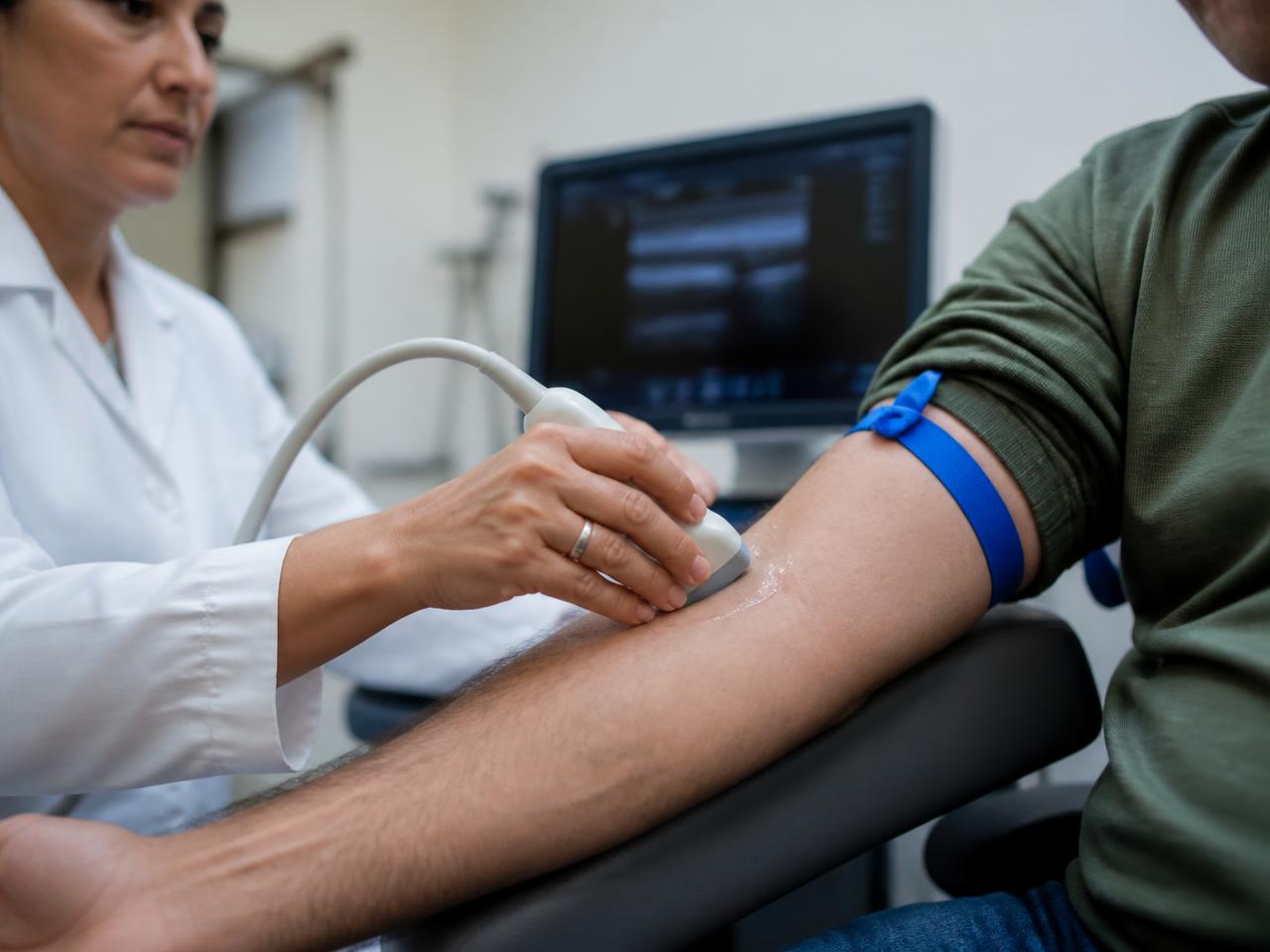
Researchers at the University of Surrey conducted STAMINA, a randomized, double-blind, placebo-controlled study of the complete NOVOS Core formulation.5,6 The registered trial enrolled 61 adults aged 40+. Participants were randomized to NOVOS Core or placebo. The intervention lasted 6 months.
The prespecified primary outcome was flow-mediated dilation, or FMD. FMD measures how well an artery widens in response to increased blood flow. The study also measured pulse-wave velocity, a measure related to arterial flexibility, along with blood pressure and other cardiovascular outcomes.
At six months, compared with placebo, the study reported:
Percentage-point difference versus placebo at six months.
Favorable difference versus placebo in arterial flexibility.
Favorable placebo-adjusted difference among participants whose pressure was already within the normal range.
Randomized human trial. Adults 40+. Six months. Cardiovascular physiological outcomes. Did not measure lifespan. Manuscript under peer review.5
The complete Core formula was the intervention. Not one isolated ingredient. Not a hypothetical ingredient stack. The formula people actually use.
Whether the complete, commercially available NOVOS Core formulation affects vascular function in healthy middle-aged adults.
A randomized, double-blind, placebo-controlled human trial sponsored by the University of Surrey, prospectively registered as NCT06145087, enrolling 61 adults aged 40+ for six months.
Flow-mediated dilation as the prespecified primary endpoint, with pulse-wave velocity and blood pressure among secondary outcomes.
At six months versus placebo: +2.9 percentage points in FMD, a 1.18 m/s favorable difference in pulse-wave velocity, and a 6.1 mmHg favorable placebo-adjusted difference in systolic blood pressure among participants already within the normal range.
It did not measure lifespan, mortality or disease outcomes, and it does not show that Core extends human life. The manuscript is under peer review.
What STAMINA does and does not add
This is where it becomes especially important not to blur evidence tiers. The mouse study measured survival. STAMINA did not. STAMINA measured functional cardiovascular physiology.
The trial therefore does not show that Core extends human lifespan. It does not show that Core prevents heart disease. It does not show that Core prevents death. It does not validate an 18% mouse result in humans.
What it does provide is randomized human evidence that the complete formulation can measurably influence multiple physiological systems studied in relation to vascular aging. That is a very different question. And a much more relevant one for human translation than a cell assay alone.
NOVOS Core therefore now sits in an unusual scientific position. Its evidence is not based on one perfect experiment. There is no such experiment. Instead, different research models ask different questions: what happens to cells? What happens in an aging organism? What happens to human physiological function?
That is how translational research is supposed to progress.
The closer evidence gets to the finished product and to people, the more meaningful it becomes.
CHRIS MIRABILE, FOUNDER & CEO OF NOVOS
The current evidence ladder
Ingredient + mechanistic research
Hundreds of peer-reviewed studies informed ingredient selection and the aging pathways targeted by the formulation.
Why the ingredients were chosen.
Whether the final formulation works as intended.
In vitro formulation research
NOVOS formulations have been evaluated in human cell models involving DNA stress and cellular senescence-related biology.1,4
The combined formulation can produce measurable cellular effects under laboratory conditions.
Whether those effects occur inside a person.
Aged-mouse lifespan + healthspan
In the new under-peer-review experiment, continuous NOVOS Core administration beginning at 20 months increased median survival by about 18% versus metabolically stressed controls.1
The formulation altered survival in this specific aged-mouse model.
That humans will live longer.
Human case studies + pilots
Separate smaller human studies have explored epigenetic pace-of-aging and skin-firmness outcomes. These studies are useful exploratory evidence but are limited by small samples and lack of randomized placebo controls.
Where additional human research may be worth pursuing.
Definitive causal effects.
Randomized human function
STAMINA evaluated the complete Core formulation against placebo for six months in adults aged 40+ and observed statistically significant differences across multiple measures of vascular function.5,6
The finished formula can produce measurable physiological effects in randomized human research.
That Core extends human lifespan.
This is the point
It would be easy to turn all of this into a claim that NOVOS has solved aging. It has not. Nobody has.
It would also be easy to claim that every other product using the word longevity is scientifically empty. That would be unfair. Some products contain very well-studied ingredients. Some companies are doing serious research. Some interventions may eventually prove highly valuable.
The distinction we think matters is simpler: how close has the evidence come to the product you are actually taking?
If the only evidence for a twelve-ingredient product consists of twelve papers studying those ingredients separately, that is one level of evidence. If the finished formulation itself has been evaluated in cells, animals and randomized human research, that is another.
Consumers deserve to know which one they are looking at.
A list of ingredients with longevity papers is not the same thing as a longevity-tested formula.
CHRIS MIRABILE, FOUNDER & CEO OF NOVOS
That is the standard NOVOS is trying to push forward. Not “believe us because we call this longevity.” But: here is what has been measured. Here is where it was measured. Here is what it means. Here is what it does not mean.
Why study the complete formula?
The supplement industry often treats ingredient evidence as modular. If ingredient A did something useful in Study A, and ingredient B did something useful in Study B, then a product containing both is assumed to deliver both outcomes.
Biology is rarely that tidy. Compounds can share pathways. Compete. Change absorption. Alter metabolism. Amplify an effect. Or blunt one.
The existence of positive studies on the ingredients therefore makes formulation testing more necessary, not less.
The right question is not “do the ingredients have research?” They should. The harder question is: what happens when we combine them exactly this way?
The mouse study asked that question in an aging organism. STAMINA asked it in people. That is the conceptual bridge between the two studies.
Who conducted the mouse study?
The mouse manuscript lists researchers Charlotte Brookes, Edward Fielder, Evon Low, Diogo Barardo, Thomas von Zglinicki and Satomi Miwa.1
The study was funded through a UK Medical Research Council grant to Thomas von Zglinicki and a donation from NOVOS Labs to Satomi Miwa. Diogo Barardo is an employee of NOVOS Labs.
The manuscript states that the funders had no role in study design, data collection, analysis, interpretation, manuscript writing, or the decision to publish. The paper also discloses that Satomi Miwa and Thomas von Zglinicki are named inventors on a patent involving the senolytic drug combination used in the comparator arm.
These disclosures do not invalidate the research. They are information readers should have when evaluating it.
A UK Medical Research Council grant to Thomas von Zglinicki, and a donation from NOVOS Labs to Satomi Miwa.
Diogo Barardo is an employee of NOVOS Labs. Other authors are affiliated with their academic institutions, including Newcastle University.
Per the manuscript, the funders had no role in study design, data collection, analysis, interpretation, manuscript writing, or the decision to publish.
Satomi Miwa and Thomas von Zglinicki are named inventors on a patent involving the senolytic drug combination used in the comparator arm.
What would make the mouse evidence stronger?
One positive mouse experiment should lead to more experiments. The next useful questions include:
Would the survival effect replicate in another laboratory? Would it reproduce in genetically heterogeneous mice? Would females respond similarly? What happens under a conventional feeding protocol without the metabolic-stress confounder? Which biological mechanisms are most important? Would different start ages change the outcome? Which components of the formula contribute most? Would healthspan effects remain significant with larger late-life sample sizes?
And ultimately: do any of the biological patterns observed in mice correspond to effects measurable in humans?
Those are not weaknesses in the idea of researching Core. They are the research agenda.
A real longevity research program should generate new questions faster than marketing answers them.
Why the human trial matters so much
If NOVOS had only an 18% mouse survival result, this article would still be interesting. But it would remain entirely preclinical.
The reason the broader Core story is more meaningful is that the formulation has also moved into randomized human research. STAMINA did not recreate the mouse experiment. That would be impossible over six months. Instead, it asked whether a major aging-related physiological system could be measurably affected in humans.
The study focused on cardiovascular function because vascular aging changes measurably across adulthood, supports every organ through circulation, and can be assessed using validated functional endpoints.
The complete Core formula produced statistically significant placebo-adjusted effects across three independent vascular measures.5 That is important precisely because it is a different type of evidence.
Cells tell us about mechanism. Mice tell us what happened to survival in an animal model. Humans tell us whether the formulation can affect measurable physiology in people. No one study substitutes for the others.
The category question, revisited
There is no single perfect test. A product should not need a 60-year mortality trial before anyone is allowed to discuss healthy aging. But the word should carry some scientific responsibility.
At minimum, we think consumers should be able to ask:
Those questions create a much more useful standard than “how many longevity buzzwords fit on the label?”
The formula behind the research
NOVOS Core contains twelve ingredients selected to address the interconnected biology of aging. But the ingredient list is only the starting point. The more important distinction is what happened next.
The formulation moved through mechanistic research, human-cell experiments, an aged-mouse lifespan study, human observational and pilot work, and randomized, double-blind, placebo-controlled human research.
That does not prove that Core extends human life. It does something more defensible. It provides a growing body of evidence that the finished formulation can measurably interact with biological systems studied in aging research. And it allows consumers to evaluate the product based on more than a collection of ingredient citations.

The same twelve-ingredient formulation used in the research program, evaluated from cells to a randomized human trial.
A different way to think about longevity products
There will probably never be one molecule that defines longevity. Aging is too complex. And there will probably never be one study that proves everything a serious longevity intervention needs to prove.
The better model is cumulative. Biological rationale. Mechanism. Whole-formula testing. Animal evidence. Human physiology. Replication. More human research.
Each step can invalidate what came before. That is a feature of science, not a problem.
For NOVOS, the goal is not to build the best argument around the ingredients. It is to keep testing the formula.
Most products can tell you why they should work. The harder question is what happened when someone actually checked.
CHRIS MIRABILE, FOUNDER & CEO OF NOVOS
Final limitation
Every one of those statements should remain attached to the evidence. Because the goal is not to make mouse science sound human. The goal is to build the human evidence that eventually matters more.
Longevity science should become harder as it gets better
Harder to test a formulation. Harder still to follow an aging animal for the rest of its life. Harder again to randomize people to a finished formulation and measure real physiological function.
That progression matters.
NOVOS Core is not the answer to human longevity. No supplement can credibly claim that today. But it represents a different approach to building one:
Start with aging biology. Design a system. Test the system. Publish the results. State the limitations. Move closer to humans. Then test again.
That is what a longevity research program should look like.
Built for longevity.
Studied like it.
NOVOS Core is a twelve-ingredient longevity formulation designed around the interconnected biology of aging. Its growing research program includes human cellular research, aged-mouse lifespan research, human biological-aging and skin research, and randomized, double-blind, placebo-controlled human clinical research.
Animal studies do not establish human lifespan extension. Human randomized research evaluated cardiovascular function, not lifespan. Individual results vary.
References
Rescuing Healthspan in Obese, Aged Mice: A Comparison between Multi-Ingredient Nutraceuticals and Senolytic Interventions
Interventions Testing Program
Hallmarks of Aging: An Expanding Universe
Promising Effects of Novel Supplement Formulas in Preventing Skin Aging in 3D Human Keratinocytes
Acute and 6-Month Vascular Effects of a Multi-Component Nutritional Supplement: A Randomised Controlled Trial
Investigation of Short and Intermediate Term Effects of a Supplement Mix Designed to Target Ageing Mechanisms on Vascular Function in Healthy Middle-aged Participants (STAMINA)
This article is for educational purposes.
Animal research does not establish that NOVOS Core extends human lifespan or produces the same effects in people. The mouse study described here was conducted in aged male mice under specific experimental conditions. The manuscript is publicly available as a preprint and is currently under peer review.
NOVOS Core has not been demonstrated to extend human lifespan.
The STAMINA human trial evaluated cardiovascular and vascular-function biomarkers, not lifespan, mortality or disease outcomes.
NOVOS Core is a dietary supplement and is not intended to diagnose, treat, cure or prevent disease. These statements have not been evaluated by the Food and Drug Administration.
Individual results vary.