Before buying anything, look for the obvious disruptors
There is something appealing about the idea that poor sleep is caused by one missing ingredient.
Sometimes nutrition may matter.
But sleep is also extraordinarily responsive to behavior, timing, environment and health.
The basic causes are not glamorous.
That does not make them unimportant.
1. Not enough opportunity to sleep
Most healthy adults are advised to obtain at least seven hours of sleep regularly.[5]
Some people need more.
If your body functions best with eight hours and your schedule repeatedly allows six, no supplement can manufacture the missing two hours.
You cannot supplement your way out of a night you never gave yourself time to sleep.
2. Circadian timing
Being exhausted and being biologically ready to sleep are not always the same thing.
Your circadian system helps determine when sleep and wakefulness occur.
Light is one of its most powerful environmental signals.
Daytime light exposure and relatively consistent daily timing help reinforce the difference between biological day and night.
3. Caffeine
Caffeine sensitivity varies enormously.
For some people, an afternoon coffee causes no obvious problem.
For others, caffeine consumed many hours before bedtime can still interfere with sleep onset or sleep quality.
Coffee is not the only source.
Tea, pre-workout formulas, energy drinks, chocolate and some medications can contribute too.
If falling asleep is consistently difficult, moving caffeine earlier is one of the simplest variables to test.
4. Stress and cognitive arousal
You can be physically exhausted while your brain remains alert.
Work stress, rumination, anxiety and even worrying about sleep itself can create a state in which trying harder to fall asleep becomes counterproductive.
Being tired is not identical to being calm.
5. Alcohol
Alcohol can make people feel drowsier.
That does not necessarily mean it produces better sleep.
It can make falling asleep seem easier while disrupting sleep later in the night.
Sedation and restorative sleep are not the same biological goal.
6. The room
Temperature.
Light.
Noise.
An uncomfortable mattress.
A snoring partner.
A phone vibrating three feet from your head.
Sleep remains sensitive to the environment around you.
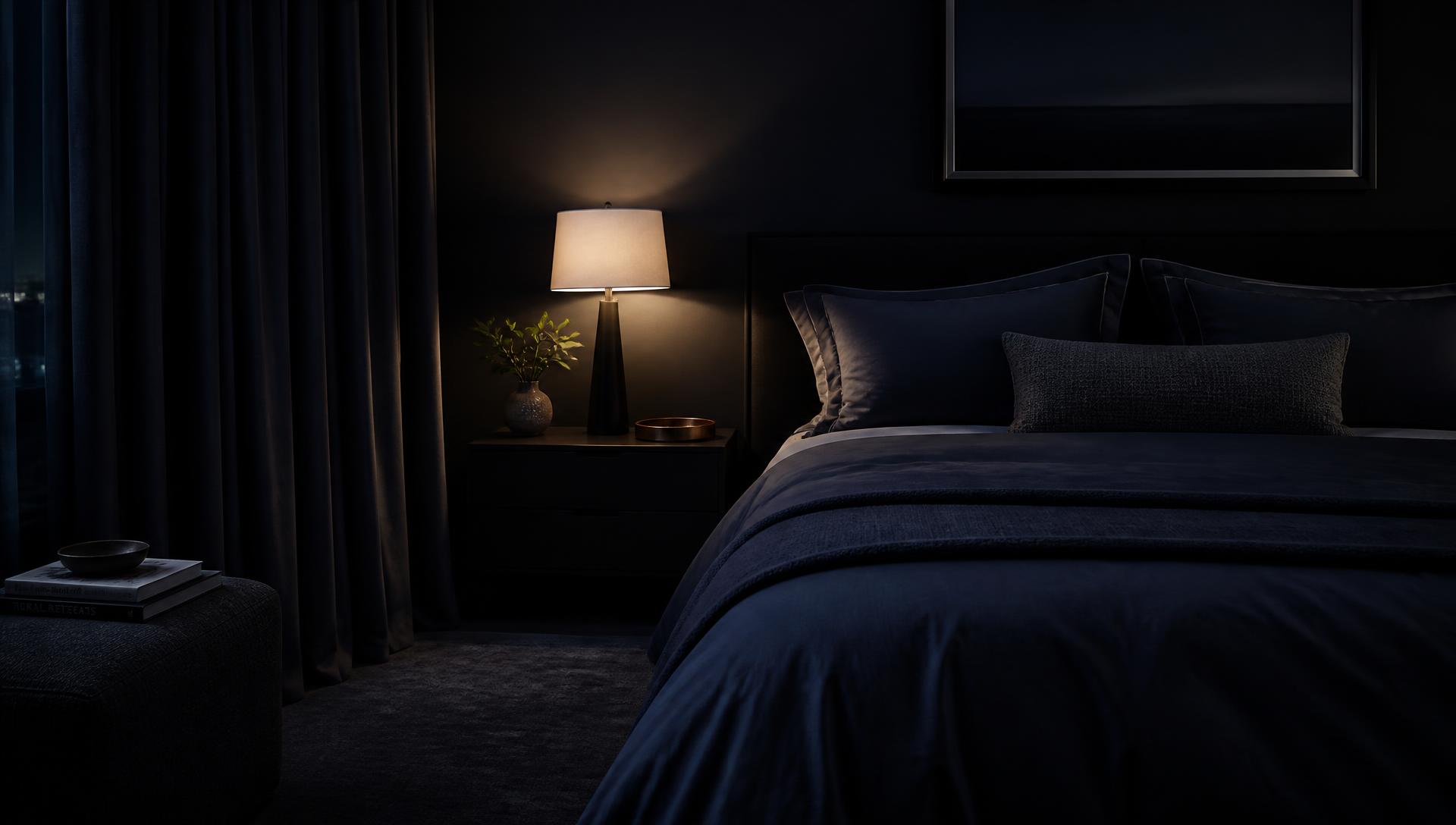
A cool, dark, quiet bedroom is boring advice.
It is still good advice.