
You got a number. Here's how to read it.
A quick guide to your FaceAge result: what it can tell you about how you're aging, and what you can do about it.
In this guide: what your two scores mean, how much is genetic, what shapes the rest, how a face actually ages, and where to go next.
6 things your FaceAge result is actually telling you
 01
01It's an estimate of how old you look, and that can matter more than it sounds
Your Facial Age is a read on perceived age: how old you appear to others. Perceived age can carry real information about your health. In a 2009 study published in the BMJ, researchers found that people who were judged to look older tended to have shorter survival and lower physical and cognitive function as they aged.
Christensen K, et al. BMJ, 2009.
 02
02You got two readings: Facial Age and Eye Age
What is Facial Age?
Facial Age is an AI estimate of how old your whole face looks, given as an age in years. It means the most when you set it beside your real age. Land lower, and your face reads younger than your years. Land higher, and it reads older. Right around even means it's reading in line with your age. For most people, lower is the goal.
What is Eye Age?
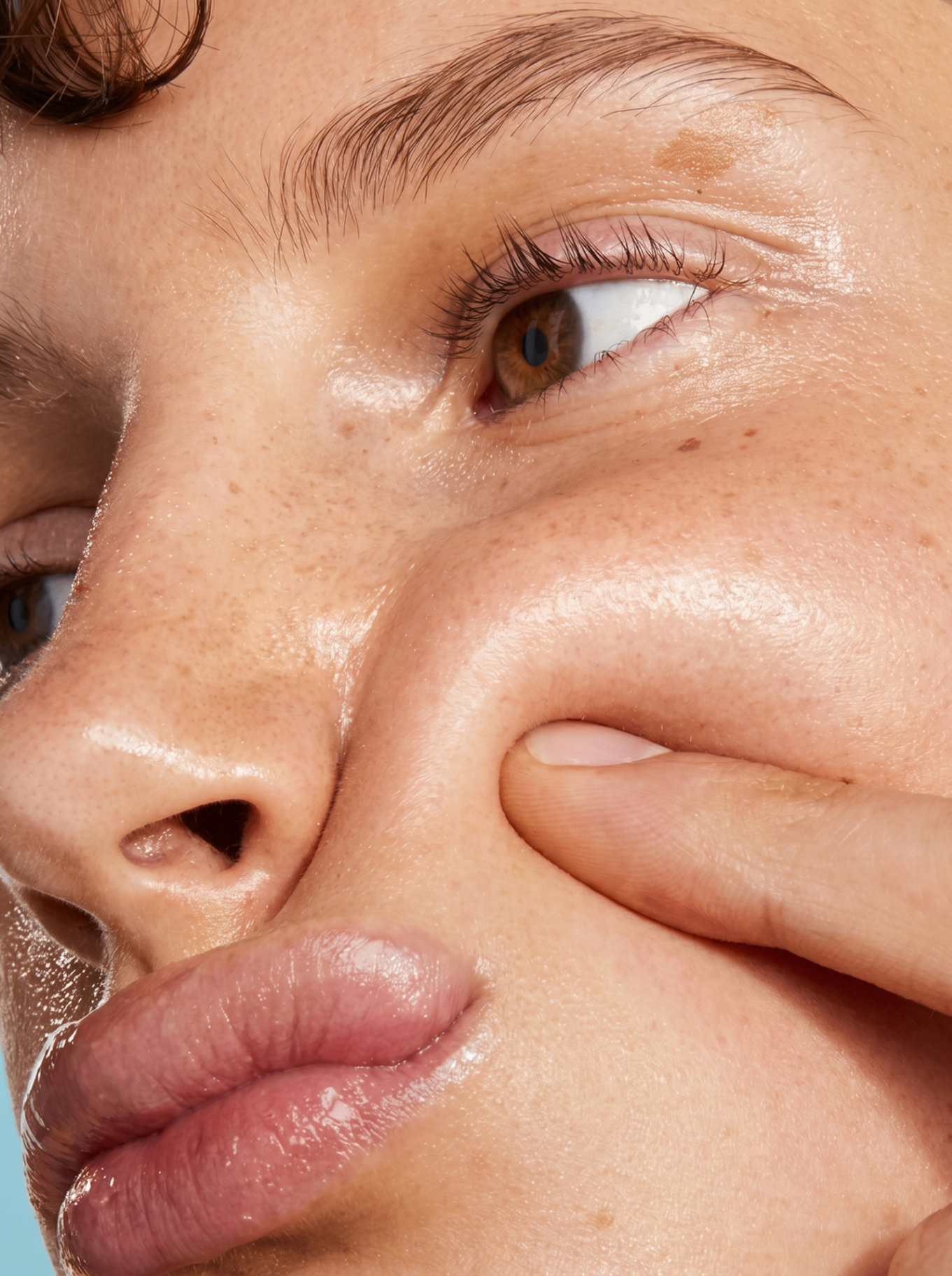
Eye Age estimates the age of the skin around your eyes, reported as its own number. You read it the same way: lower than your real age means that skin looks younger, higher means it looks older.
It gets a number of its own because the skin around the eyes is among the thinnest on the body, and it often changes before the rest of the face. A higher Eye Age can show up before your Facial Age moves at all. So if your eyes are reading older than the rest of you, that's the area showing its age first.
 03
03Only about 60% of how old you look is genetic
Here is the part most people find surprising. Researchers studied twins, including identical twins who share essentially the same DNA, and estimated that genes account for roughly 60% of how old we look. That leaves a large share, close to 40%, that is not fixed at birth. A meaningful part of your result is shaped by things you can influence.
Christensen K, et al. Epidemiology, 2004.
 04
04The rest tracks with how you live
So what lives in that other portion? The familiar factors. Sun exposure, smoking, and weight that goes up and down have all been associated with looking older. None of those is fixed. That is the optimistic way to read your FaceAge number.
Guyuron et al.; Martires et al.
 05
05Your face ages in more than one layer
Aging shows up in more than the skin. What you read as an older appearance comes from changes across several layers: the skin, the fat beneath it, the muscle, the connective tissue, and even the bone underneath. Review articles describe facial aging as a layered process. It is one reason surface skincare can only do part of the job.
Cotofana et al.; Zimbler et al.
 06
06One reading is a snapshot. A monthly habit is a trend.
A single result tells you where you are today. The more useful signal comes from repeating it. You can retake the free NOVOS FaceAge test month to month and watch the direction of travel, which is the thing you can actually act on.
So where does NOVOS Core fit?
While skincare focuses on the surface, visible aging is also influenced by changes happening beneath it.
NOVOS Core is a daily formula designed to target all 12 Hallmarks of Aging, the framework scientists use to describe the main biological processes that drive aging. It was developed with input from scientists at Harvard Medical School, MIT, and other leading institutions.
EARLY SKIN DATA ON NOVOS CORE
skin firmness
6 mo
Study length
4
Participants
12–40%
Range
Three more free ways to read how you're aging
Free Longevity Lifestyle Quiz
Scores how closely your daily habits line up with healthier aging.
Take the free quizFree BioAge Quiz
Gives you a survey-based estimate of your biological age, no blood test required.
Take the free BioAge quizNOVOS Life
Our free longevity app, with an AI longevity coach that brings your habits, wearables, and results together and turns them into daily actions.
Get NOVOS Life
Start with the number. Then go deeper.
FaceAge measures what’s visible. NOVOS Core is designed to support the biology behind it.
IMPROVE YOUR SCOREReferences
Christensen K, et al. BMJ, 2009. · Christensen K, et al. Epidemiology, 2004. · Guyuron B, et al. (identical-twin study). · Martires KJ, et al. (twin survey study). · Cotofana S, et al. (review). · Zimbler MS, et al. (review).