
On a GLP-1? Losing weight is only half the job.
Semaglutide, tirzepatide and related therapies can make eating less dramatically easier. But when appetite falls, protein, micronutrients, muscle, skin, strength and long-term health still need attention.
The question is no longer simply how much weight you can lose. It is what you want to keep while you lose it.
Explore the science ↓
You may be watching the scale move faster than it has in years.
Hunger is quieter. Portions that once looked normal suddenly seem enormous. You can leave food on the plate without thinking about it for the next twenty minutes.
For many people, that is exactly what makes modern GLP-1-based weight-loss therapies so transformative. They change one of the hardest parts of weight management: the biological pressure to keep eating.
But successful appetite suppression creates a new problem. When you are eating much less food, the question can shift from:
“How do I eat less?”
to:
“How do I lose what I want to lose without neglecting what I want to keep?”
Because a bathroom scale is remarkably unsophisticated. It cannot tell you whether the weight coming off was fat, lean tissue or water. It cannot tell you whether you are eating enough protein. It cannot tell you whether a much smaller diet still contains enough vitamins and minerals.
It cannot tell you why your workouts suddenly feel worse, why your hair is shedding, why your face looks different, or whether a day of very little food actually contained enough nutrition. And it certainly cannot tell you whether the habits you are building will still be there once the rapid weight-loss phase ends.
GLP-1 therapy can make losing weight easier. The second half of the job is making that weight loss as healthy as possible.
“The goal isn’t to lose the most weight. It’s to lose the right weight.”
Not all weight lost is fat
In 2026, researchers published a meta-analysis of 20 randomized trials involving 15,782 participants. They compared body-composition changes during treatment with semaglutide, tirzepatide and liraglutide with changes produced by lifestyle interventions.
The result deserves attention.
25% to 39%
of total weight loss was classified as lean mass across incretin therapies in a 2026 meta-analysis.[1]
Lean mass ≠ muscle
For semaglutide, the pooled estimate was 35.2%. For tirzepatide, 25.4%. For liraglutide, 26.8%.
Those numbers sound alarming if they are described incorrectly. So here is the important part: lean mass does not mean muscle.
Lean-mass measurements include far more than skeletal muscle. Depending on the measurement method, changes in body water, glycogen and other non-fat tissues can contribute to the result. The study therefore does NOT show that “35% of semaglutide weight loss is muscle.”
It shows something more useful: major weight loss does not come exclusively from body fat. And the way you eat and train while losing weight can influence the quality of that weight loss.
Show me the science
The meta-analysis pooled 20 randomized controlled trials of incretin therapies and lifestyle interventions, covering 15,782 participants, and compared how much of the measured weight loss was classified as lean mass under each approach.[1]
Important limitation
Lean mass is not synonymous with skeletal muscle. Body-composition tools capture water, glycogen and organ tissue alongside muscle, so a lean-mass percentage is not a direct measurement of muscle lost.[1]
A pound is not just a pound
Your total body weight is a mixture of tissues. Fat is one. Skeletal muscle is another. So are organs, bone, connective tissue, glycogen and water.
When weight changes quickly, multiple compartments can move at the same time. That is why losing twenty pounds does not automatically tell you whether the result was physiologically ideal.
One body, many compartments
The better goal
Reduce excess fat while preserving as much muscle, strength and function as practical.
Conceptual illustration. Not individual clinical data.
The same 2026 meta-analysis contained one particularly useful clue.
Lifestyle interventions without resistance training showed a proportion of lean-mass loss broadly comparable to incretin treatment. But lifestyle programs that included resistance training had the most favorable profile, with lean mass representing approximately 17.5% of total weight lost.[1]
That does not mean resistance training prevents all lean-tissue loss. It means the signal you give your body while losing weight matters.
Muscle is more than something you see in the mirror
Most people do not start a GLP-1 because they want smaller biceps. They want less excess body fat. That distinction matters because skeletal muscle is not just cosmetic tissue.
It contributes to strength. Movement. Balance. Physical reserve. Exercise capacity. Glucose disposal. And the ability to remain physically capable as you age.
A recent review of GLP-1-based obesity treatment concluded that the quality of weight loss should be judged by more than the number on the scale. The authors emphasized muscle quantity, muscle quality, physical function, nutritional adequacy and bone health alongside fat loss.[2]
The prescription for preserving muscle is not particularly exotic. It begins with two things that existed long before GLP-1 medications did: resistance training and adequate protein.
Resistance training tells the body what you still need
Muscle is metabolically expensive tissue. During an energy deficit, the body needs a reason to maintain it. Resistance exercise provides that signal.
You do not need to become a bodybuilder. But repeatedly asking your muscles to produce force tells your body that this tissue still has work to do.
Protein provides the raw material
Exercise creates the stimulus. Protein supplies the amino acids required to maintain and rebuild muscle proteins. That becomes particularly relevant when appetite is strongly suppressed.
Someone who used to consume three substantial meals may now eat half a sandwich at lunch, a small dinner, and little else. The total calories may be excellent for weight loss. The protein intake may not be.

“Losing less muscle is not about defeating the medication. It is about giving the body a reason and the materials to keep the tissue you value.”
Your appetite may fall faster than your nutritional needs do
This may be the most underappreciated part of successful GLP-1 treatment. Eating fewer calories is often exactly the point. But calories are not the only thing food contains.
Every meal is also an opportunity to obtain protein, fiber, iron, vitamin B12, vitamin D, calcium, magnesium, zinc, essential fats and the hundreds of compounds found in whole foods. When total food intake falls dramatically, there are simply fewer opportunities to obtain them.
A 2026 review of nutritional outcomes during GLP-1 receptor agonist therapy found signals involving vitamin D, iron, calcium, vitamin B12 and other nutrients. The authors also found evidence of inadequate dietary intake in some populations, while emphasizing that much of the current evidence is observational and does not prove that GLP-1 therapy itself causes every deficiency observed.[3]
That caveat matters. Not everyone taking a GLP-1 becomes nutrient deficient. Someone eating a carefully planned, nutrient-dense diet may do extremely well. Someone living on crackers, coffee and half of whatever dinner happens to be may not.
The issue is not that GLP-1 therapy creates a mysterious new set of human nutrient requirements. The issue is simpler:
A smaller diet has less room for nutritional empty space.

- Protein
- Vitamins
- Minerals
- Fiber
- Essential fats
Your nutritional needs do not necessarily fall in proportion to your appetite.
“I’m eating less” and “I’m eating better” are not the same sentence
A tiny diet can be nutrient dense. It can also be nutritionally sparse.
Imagine two lunches with similar calories. One contains protein, vegetables, seeds, olive oil and a meaningful range of vitamins and minerals. The other is a few crackers and part of a sweetened coffee.
The scale sees the calorie deficit. Your body sees two very different meals.
That is why the emerging GLP-1 nutrition literature increasingly emphasizes food quality, protein intake and individualized monitoring rather than simply celebrating lower calorie intake.[2][3]
For people whose intake becomes very restricted, the nutritional conversation may include:
Protein, to support muscle-building nutrition.
Iron and B vitamins, which matter for red blood cells, energy metabolism and other basic physiology.
Vitamin D, calcium and magnesium, which are relevant to bone, muscle and numerous other systems.
Zinc and other trace minerals, which participate in a wide range of biological processes.
Fiber, which matters for digestive health, but requires a little more nuance during GLP-1 therapy.
This does not mean you should blindly supplement everything. It means that the less you eat, the more intentional the remaining food should become.
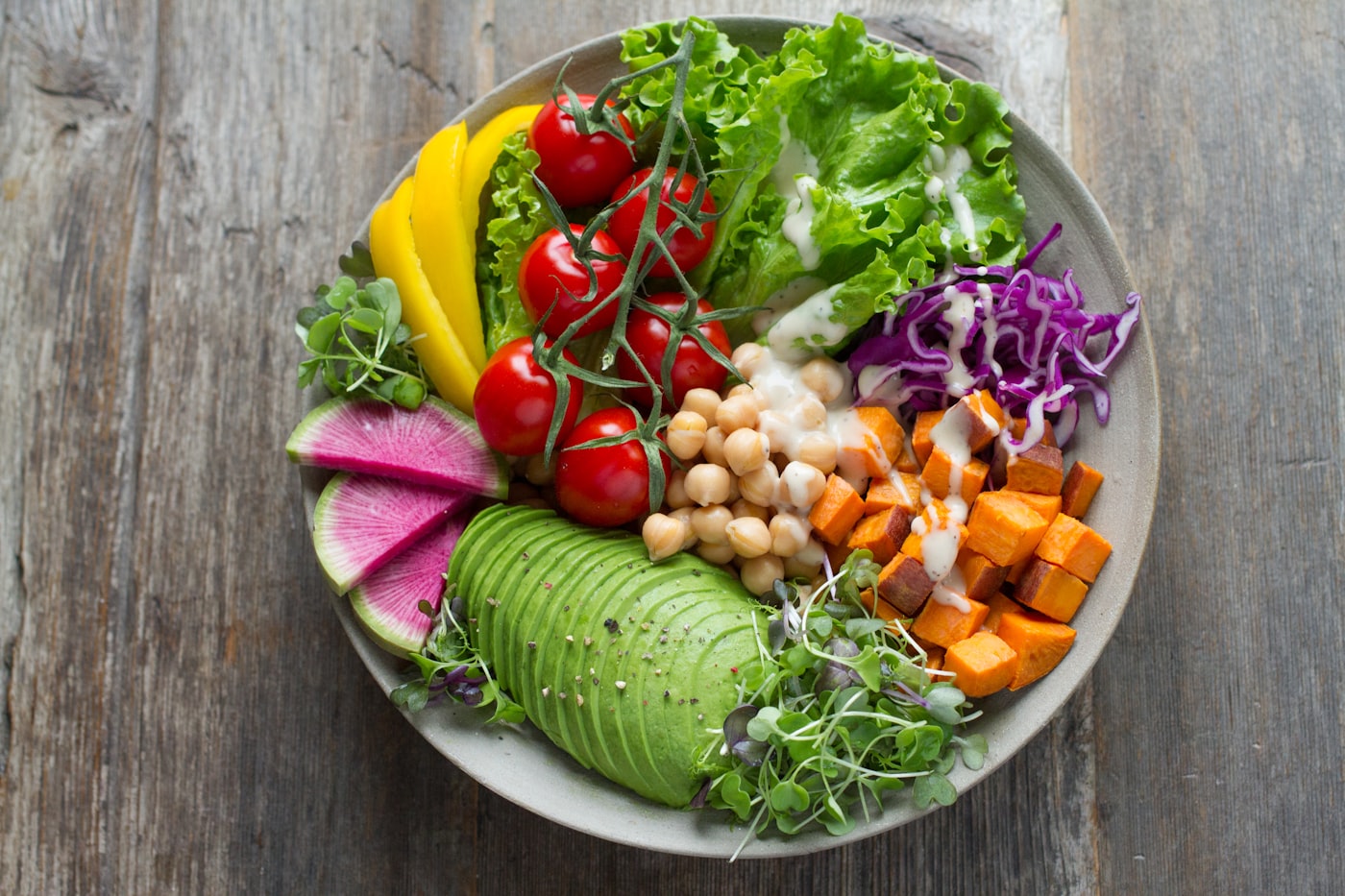
“When appetite shrinks, every eating opportunity has to work harder.”
Sometimes the limiting factor is your stomach, not your motivation
There is another reason GLP-1 nutrition cannot be reduced to a spreadsheet. You may know exactly what you want to eat and still not feel capable of eating it.
Gastrointestinal effects are among the most common challenges associated with GLP-1 and dual incretin therapies. A Mayo Clinic review describes nausea, vomiting, diarrhea, constipation and delayed gastric emptying among the effects encountered in clinical practice.[4] Early fullness can be part of the experience too.
This changes the nutrition strategy. A giant high-protein meal is not useful if the idea of eating it makes you nauseated. A large salad may sound virtuous but feel impossible on a day when your stomach already feels overly full. And a large sudden increase in fiber is not automatically helpful if you are already uncomfortable and bloated.
Fiber still matters. Tolerance matters too.
Fiber remains an important part of a healthy diet. It contributes to digestive regularity and feeds parts of the gut microbiome. But “more” is not always the right answer in the middle of active gastrointestinal symptoms.
Someone tolerating food well may benefit from intentionally maintaining fiber intake. Someone experiencing significant nausea, vomiting, severe fullness or bloating should not force a generic fiber target simply because an article told them to.
The nutrition plan has to work with the person actually eating it.
When this stops being a nutrition problem
Persistent vomiting, inability to maintain hydration, severe or persistent abdominal pain, or difficulty consuming adequate nutrition deserves medical attention.
Speak with the clinician managing your medication. Do not change, pause or adjust a prescription based on this article.
What about hair shedding?
For some GLP-1 users, the first unexpected change is not muscle or digestion. It is the shower drain.
Hair loss and shedding have increasingly been reported in association with GLP-1-based treatment. A 2026 systematic review examined 24 studies evaluating hair loss in association with GLP-1 receptor agonists.[5]
The evidence suggests that an association exists, but the biology is not settled. There are several plausible explanations. Rapid weight loss itself can trigger telogen effluvium, a temporary shift that causes more hairs to enter the shedding phase. Physiological stress may contribute. Inadequate calories, protein or particular nutrients can also be relevant to hair health. And drug-specific mechanisms remain under investigation.
The appropriate conclusion is not: “Take a supplement and your hair will stay.”
It is: if you are losing weight quickly, good nutrition is one of the variables worth protecting. Persistent or significant hair loss deserves proper evaluation because nutritional issues are only one of many possible causes.
Skin
The scale may move faster than your face can adapt
The phrase “Ozempic face” is everywhere. It is also misleading. It makes the visible facial changes associated with major weight loss sound like a mysterious toxic effect of one medication.
A more useful explanation begins with anatomy. Your face contains superficial and deep fat compartments. When you lose substantial body weight, some of that volume can disappear too.
In a 2025 study, researchers identified 20 patients who had facial CT or MRI imaging before and after GLP-1 agonist treatment. The participants lost an average of 11 kilograms. Median total midfacial volume decreased by 9%. The investigators found that greater weight loss was associated with greater loss of superficial facial volume.[6]
This was a small retrospective study. It does not tell us exactly what every user’s face will do. But it supports something aesthetically obvious: substantial weight loss can change facial volume.

Lost volume and skin quality are not the same problem
This distinction is crucial. If facial fat volume disappears, a nutrition supplement cannot put that fat compartment back. No protein bar restores a lost cheek fat pad. No carotenoid reverses ten kilograms of facial-volume redistribution. And no longevity supplement has been demonstrated to prevent “Ozempic face.”
Skin quality is different. The skin itself still depends on structural proteins, hydration, extracellular matrix, adequate nutrition and the biological processes that maintain tissue. Those factors may influence how skin looks and behaves. But they should not be confused with restoring volume.
Facial volume
- Subcutaneous fat compartments
- Superficial and deep fat pads
Weight loss can reduce volume.
A supplement cannot replace lost facial fat.
Skin quality
- Epidermis
- Dermis
- Extracellular matrix
Skin structure and nutrition are a separate biological question.
Volume and skin quality are related. They are not the same thing.
“Lost facial volume is not a nutrient deficiency. Skin quality is a different biological problem.”
Your GLP-1 may already be improving more than your weight
It would be scientifically dishonest to imply that GLP-1 therapy tackles the scale while NOVOS has to rescue everything else. These therapies can produce important health benefits of their own.
The clearest example is cardiovascular health. In the SELECT trial, 17,604 adults with overweight or obesity and established cardiovascular disease, but without diabetes, were randomized to semaglutide or placebo. Major cardiovascular events occurred in 6.5% of participants receiving semaglutide and 8.0% receiving placebo, corresponding to a 20% relative reduction in the primary cardiovascular endpoint.[7]
That is a major result. It also reveals something important about the psychology of this moment. You are not merely making yourself smaller. You may be in the middle of one of the most consequential health changes you have made in years.
So perhaps this is the wrong question: “When do I get to stop thinking about my health?”
A better one might be:
“Now that I finally have momentum, what else do I want to improve?”
Maybe that means becoming stronger. Improving cardiovascular fitness. Eating better food. Sleeping consistently. Getting your blood pressure and lipids where you want them. Building enough muscle to remain physically capable decades from now. Or simply becoming the person whose daily habits match the health you wanted when you started losing weight in the first place.

“The scale can be the catalyst. It should not be the finish line.”
Goal weight changes the problem again
Weight loss has an obvious feedback system. You step on the scale. The number goes down. Success.
Maintenance is quieter. Nothing happens. Again. And again. And again.
That is the goal.
In the STEP 1 extension, researchers followed a subset of participants for a year after semaglutide and lifestyle intervention were stopped. During treatment, the semaglutide group had lost an average of 17.3% of body weight. Over the following year, participants regained approximately two-thirds of that prior weight loss.[8]
That does not mean everyone will regain the same amount. And it does not mean this article can tell you whether or when to stop medication. Obesity is a chronic condition, and medication decisions should be made with the clinician treating you.
But the study reinforces something that matters whether medication continues or not:
Long-term results require a long-term system.
The habits worth building during active weight loss are the same ones likely to matter when the scale is no longer changing dramatically: resistance training, adequate protein, nutrient-dense food, regular physical activity, sleep, medical care and a routine you can actually live with.
So what does good GLP-1 nutrition look like in real life?
By now, the ideal sounds almost comically obvious. Eat enough protein. Resistance train. Choose nutrient-dense foods. Get fiber. Eat vegetables. Do not forget vitamins and minerals. Manage GI tolerance.
Simple. Until it is 2:30 p.m., you have had coffee and three bites of lunch, you are not particularly hungry, and dinner is five hours away.
That is the practical problem. The most nutritionally perfect meal in the world does not help if you do not want to eat it. So the useful question becomes:
How much nutrition can you fit into an eating occasion that still feels manageable?
That is where NOVOS Bar becomes particularly relevant. Not because it makes semaglutide work better. Not because it causes additional weight loss. Not because it prevents side effects. Its role is much simpler: it makes one relatively small eating occasion unusually nutrient dense.
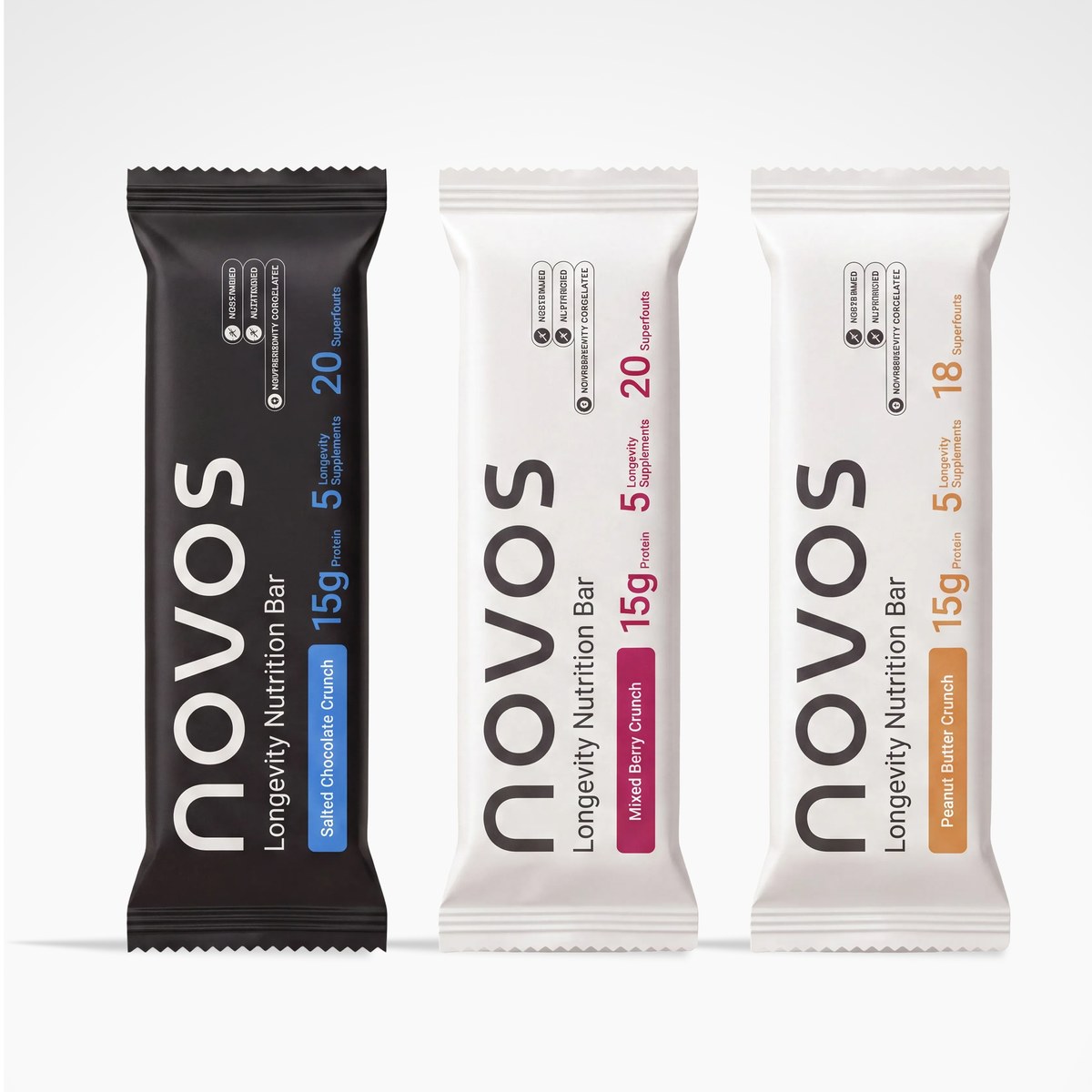
NOVOS Bar, in Salted Chocolate Crunch, Mixed Berry Crunch and Peanut Butter Crunch.
The everyday option
When every bite counts, put more into it
One NOVOS Bar currently provides:
It also includes real-food ingredients and five disclosed longevity ingredients.
That combination is what makes the Bar particularly relevant in the GLP-1 context. Many protein bars solve one problem: protein. Some add fiber. Most are not designed to provide half of the Daily Value for 21 essential vitamins and minerals at the same time. NOVOS Bar was.
Start with protein
Each Bar provides 15 grams of complete plant protein from complementary plant sources providing all nine essential amino acids.
That does not mean one Bar satisfies your entire daily protein requirement. It almost certainly does not. Individual protein needs vary with body size, age, activity, health, kidney function and other factors.
But if strong appetite suppression has turned lunch into a very small eating occasion, fifteen grams of complete protein is meaningfully different from five grams. Especially when resistance training is part of the plan.

Training provides the signal. Protein provides the building material.
Then comes everything a typical protein bar forgets
Protein gets most of the attention because it is easy to put on the front of a package. Micronutrients are quieter.
NOVOS Bar provides 50% of the Daily Value for 21 essential vitamins and minerals in one Bar. Two Bars provide 100% of the Daily Value for those 21 nutrients according to the current Nutrition Facts panel.
That does not make the Bar a treatment for nutritional deficiency. It does not mean someone with documented iron, B12, vitamin D or another deficiency should ignore medical care and eat more Bars. It means that for ordinary daily nutrition, the Bar makes a large contribution to micronutrient intake in a relatively small eating occasion.
That is precisely the kind of nutritional density that becomes interesting when appetite has fallen substantially.
Inside one Bar
Tap a nutrient to see where it appears in the panel.
NOVOS Bar
Selected nutrition per Bar. 21 essential vitamins and minerals at 50% DV each.Two Bars provide 100% of the Daily Value for those 21 nutrients according to the current Nutrition Facts panel.
Seven grams of fiber, with one important caveat
NOVOS Bar provides 7 grams of dietary fiber. That can make a meaningful contribution to daily intake. But this is where GLP-1-specific reality matters.
If you feel good, tolerate the Bar well and are trying to keep fiber in your diet, great. If you are actively nauseated, extremely full, vomiting or significantly bloated, do not force a Bar because a website told you that seven grams of fiber is useful.
Your GI tract gets a vote. Nutrition has to be nutritionally sound and physically tolerable.
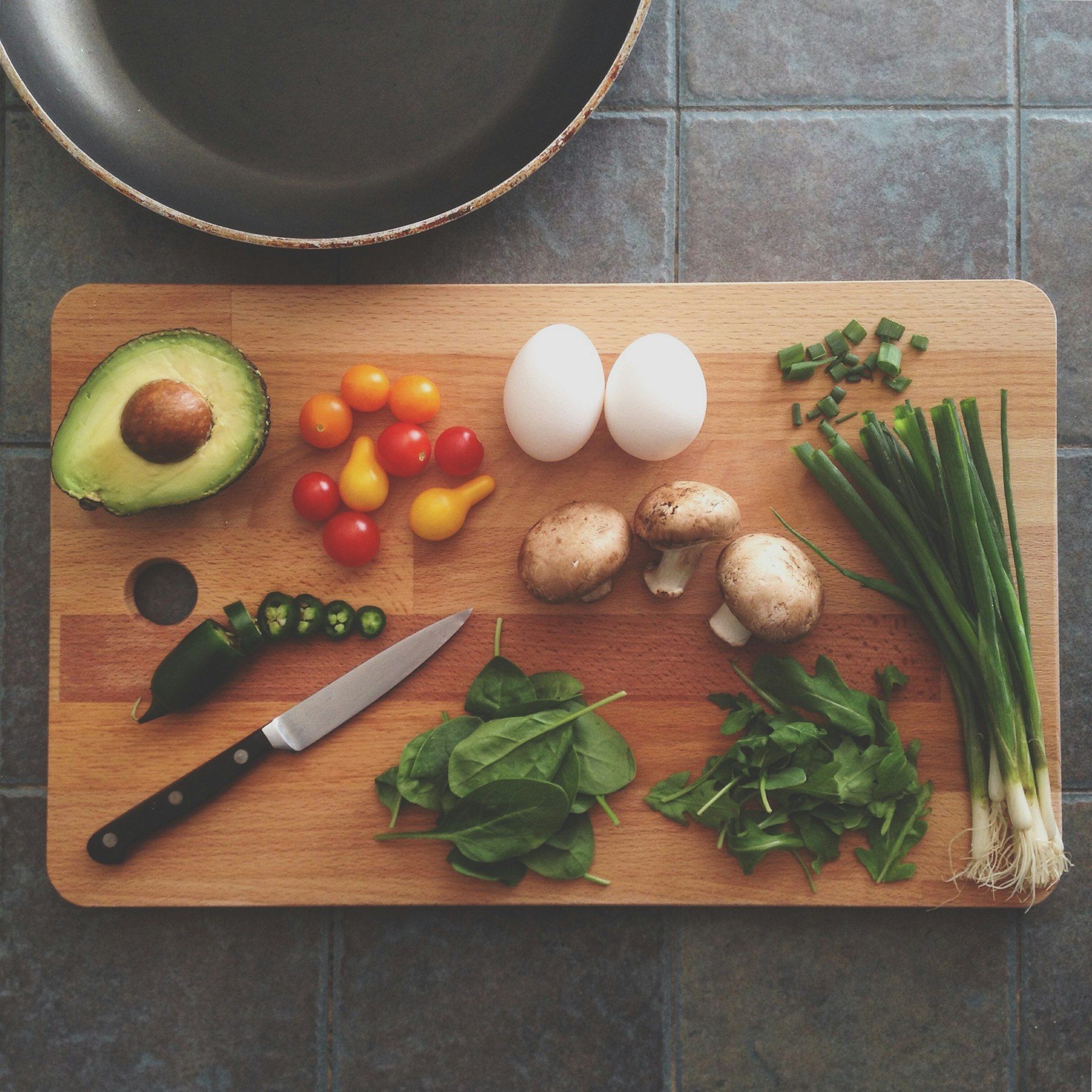
Nutrient density does not have to look like a pill organizer
NOVOS Bar was built around real-food ingredients including organic olive oil, organic seed butters, honey, fruits, vegetables and mushrooms. It contains no artificial sweeteners or sugar alcohols.
The Bar also includes five functional longevity ingredients:
Those are not the primary reason the Bar belongs in this article. The protein, fiber and micronutrient density are. The longevity ingredients are an additional layer.
One Bar is a snack. Two can be a meal.
The current Bar formulation makes the math simple. One Bar provides 15 g protein, 7 g fiber and 50% DV of 21 essential vitamins and minerals. Two provide 30 g protein and 100% DV of those 21 essential nutrients.
NOVOS positions one Bar as a nutrient-dense snack and two as a more substantial meal option. For a GLP-1 user, however, appetite and tolerance matter. “Two Bars make a meal” is a product-use option. It is not an instruction to force two Bars into a stomach that only wants one.
Use the amount that fits your nutritional plan and tolerance.
Complete nutrition only works if people actually want to eat it
There is a basic problem with theoretically perfect nutrition. You still have to consume it.
NOVOS Bar was developed with registered dietitian Brooke Alpert, M.S., R.D., C.D.N., alongside NOVOS scientists. Flavor and texture development also involved Van Nguyen, formerly pastry sous chef at Michelin Three-Star The French Laundry.
That combination matters more in the GLP-1 era than it might sound. When appetite is already low, eating should not feel like another medical task. A nutrient-dense product that sits untouched in the pantry is nutritionally irrelevant.
NOVOS Bar is nutrition. It is not a treatment for GLP-1 side effects.
NOVOS Bar is food.
It has not been shown to make semaglutide, tirzepatide or another incretin therapy produce more weight loss. It has not been clinically demonstrated to prevent lean-mass loss. It does not treat nausea. It does not treat constipation. It does not prevent hair loss. It does not prevent skin laxity. And it has not been shown to prevent weight regain.
Its advantage is nutritional. Fifteen grams of complete protein. Seven grams of fiber. Twenty-one essential vitamins and minerals at 50% DV. Real-food ingredients. All in one convenient eating occasion.
For someone whose biggest nutritional challenge has become “I simply do not want to eat very much,” that can be meaningful.
What about the rest of the NOVOS system?
NOVOS Bar has the clearest role during active GLP-1 weight loss because it directly addresses food and nutritional intake. That does not make it the only NOVOS product that may be relevant. The others simply have different jobs.
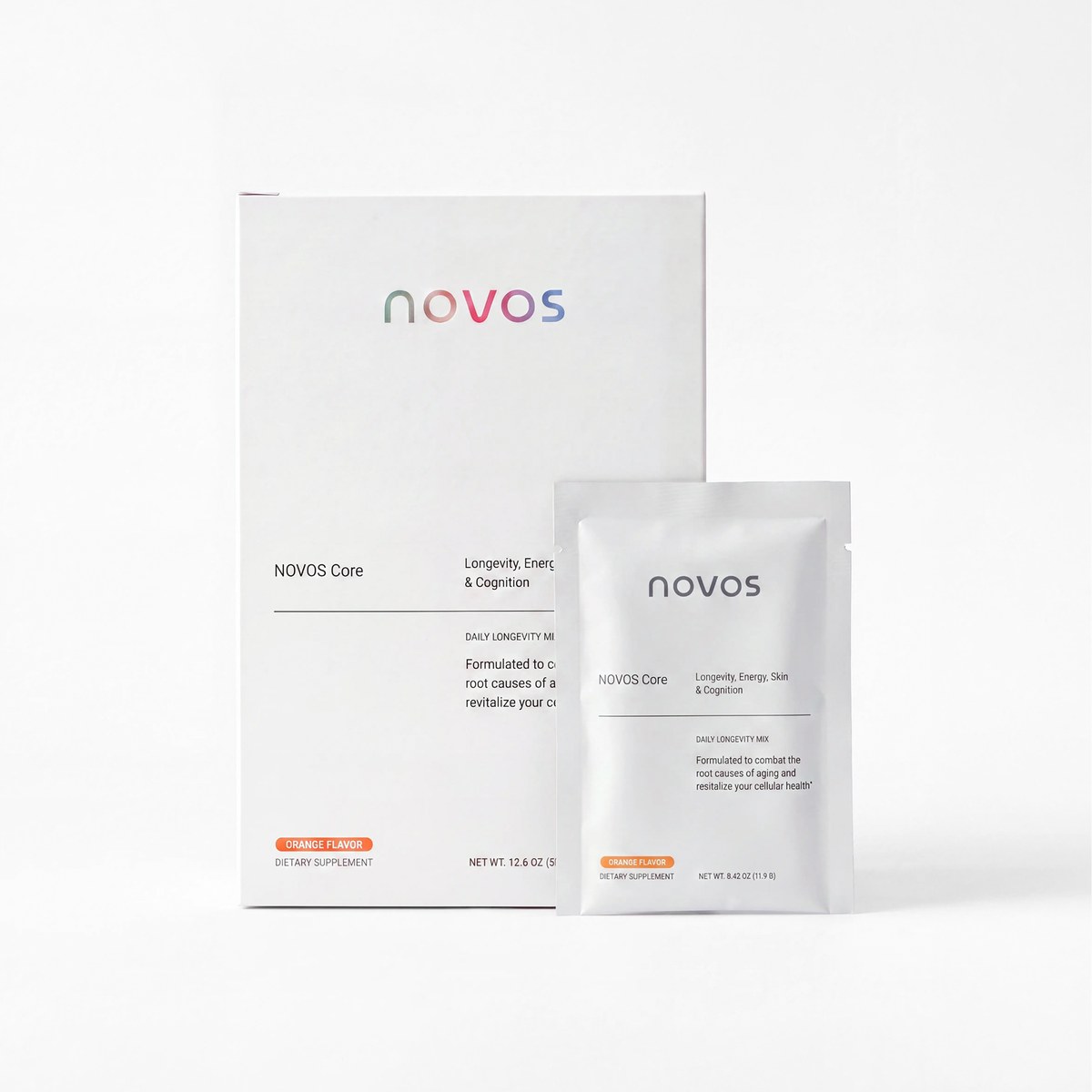
NOVOS Core: When weight loss becomes a broader health project
People rarely want to lose weight only to occupy less physical space. They want better health. Lower risk. More energy. Better physical function. A body they expect to carry into later life.
That is where Core fits. Core is not a GLP-1 supplement and has not been shown to increase medication-driven weight loss. It is NOVOS’ foundational longevity formulation, designed around the broader biology of aging.
Cardiovascular health is a particularly interesting example
GLP-1 therapies themselves can improve cardiovascular outcomes. Core has a separate research story.
In a randomized, double-blind, placebo-controlled human trial in healthy adults aged 40 and older, the finished NOVOS Core formulation demonstrated beneficial effects versus placebo across measures of endothelial function, arterial flexibility and healthy systolic blood pressure already within the normal range.
That study was not performed in GLP-1 users. It did not evaluate obesity treatment. It should not be interpreted as evidence that Core makes GLP-1 medication work better. It is relevant for a different reason: someone who has finally created momentum around body weight may decide that weight was never the only health metric worth improving.
Skin quality is another separate question
Core contains Glycine, Hyaluronic Acid, Glucosamine and Vitamin C, ingredients relevant to skin structure and hydration. The finished Core formula also has a small preliminary human skin-firmness pilot.
Four participants took Core for six months. All four improved on the measured skin-firmness outcome, with an average improvement of 22%.
That sounds interesting because it is. It is also an n=4 pilot with no placebo group. It does NOT demonstrate that Core prevents GLP-1-related skin laxity. It does not restore facial fat volume. It is preliminary skin-quality evidence, and nothing more.
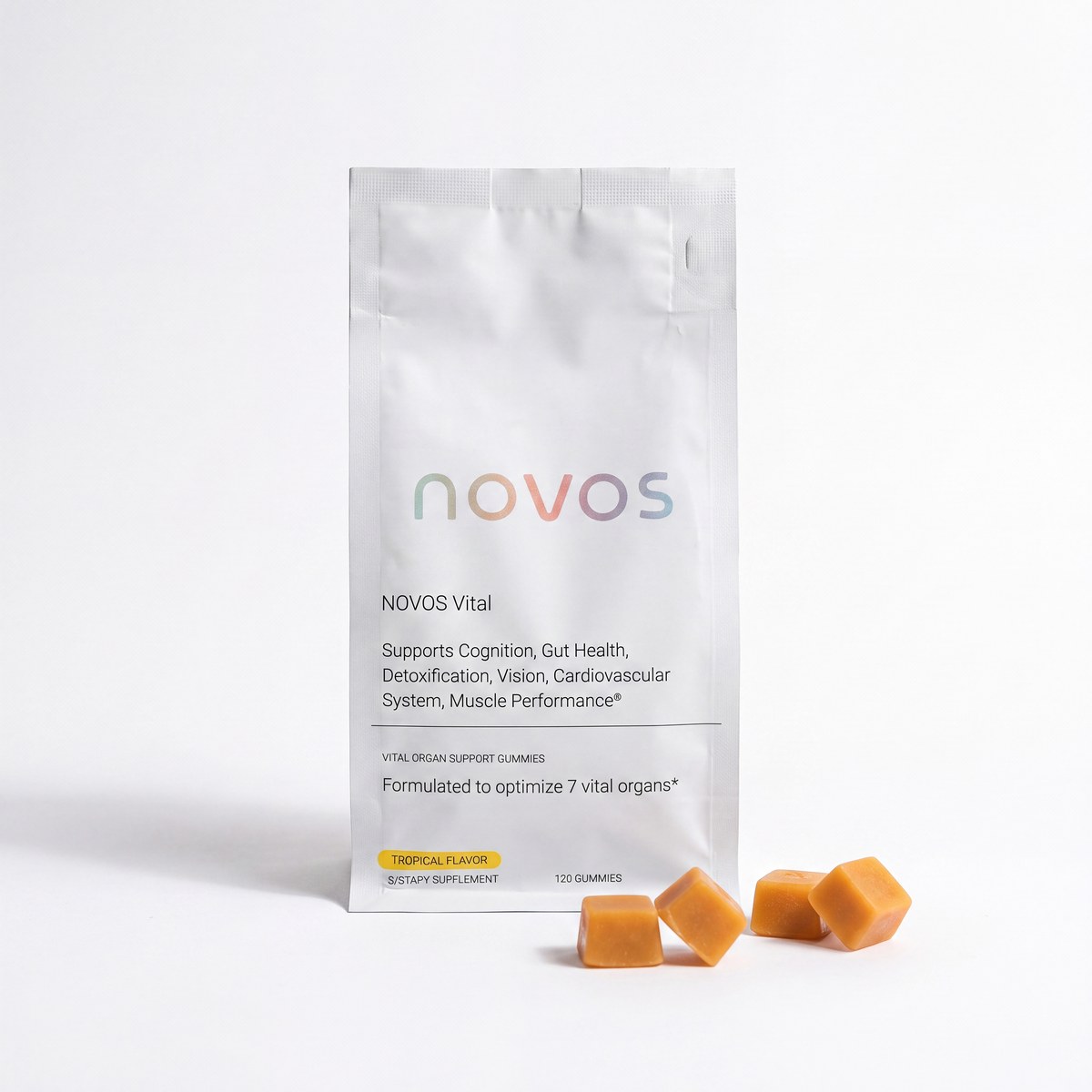
NOVOS Vital: Targeted support for the gut and other daily systems
Vital has a narrower role here. It is not a weight-loss product. It does not treat GLP-1 gastrointestinal side effects. Its most directly relevant feature for this discussion is chicory-root inulin.
Under the current approved Vital positioning, the relevant serving structure provides 4 grams of Chicory Root for Prebiotic Support. Inulin feeds bifidobacteria, the specific beneficial bacterial population shown to respond to this prebiotic fiber. That makes Vital a reasonable product to consider if targeted prebiotic support is part of your broader routine.
It does not mean Vital treats constipation, nausea, delayed gastric emptying or another GLP-1 adverse effect. Vital also provides Lutein and Zeaxanthin, with approved ingredient-level support relating to the eyes, skin and brain. Those are broader daily-system benefits. They are not GLP-1-specific benefits.
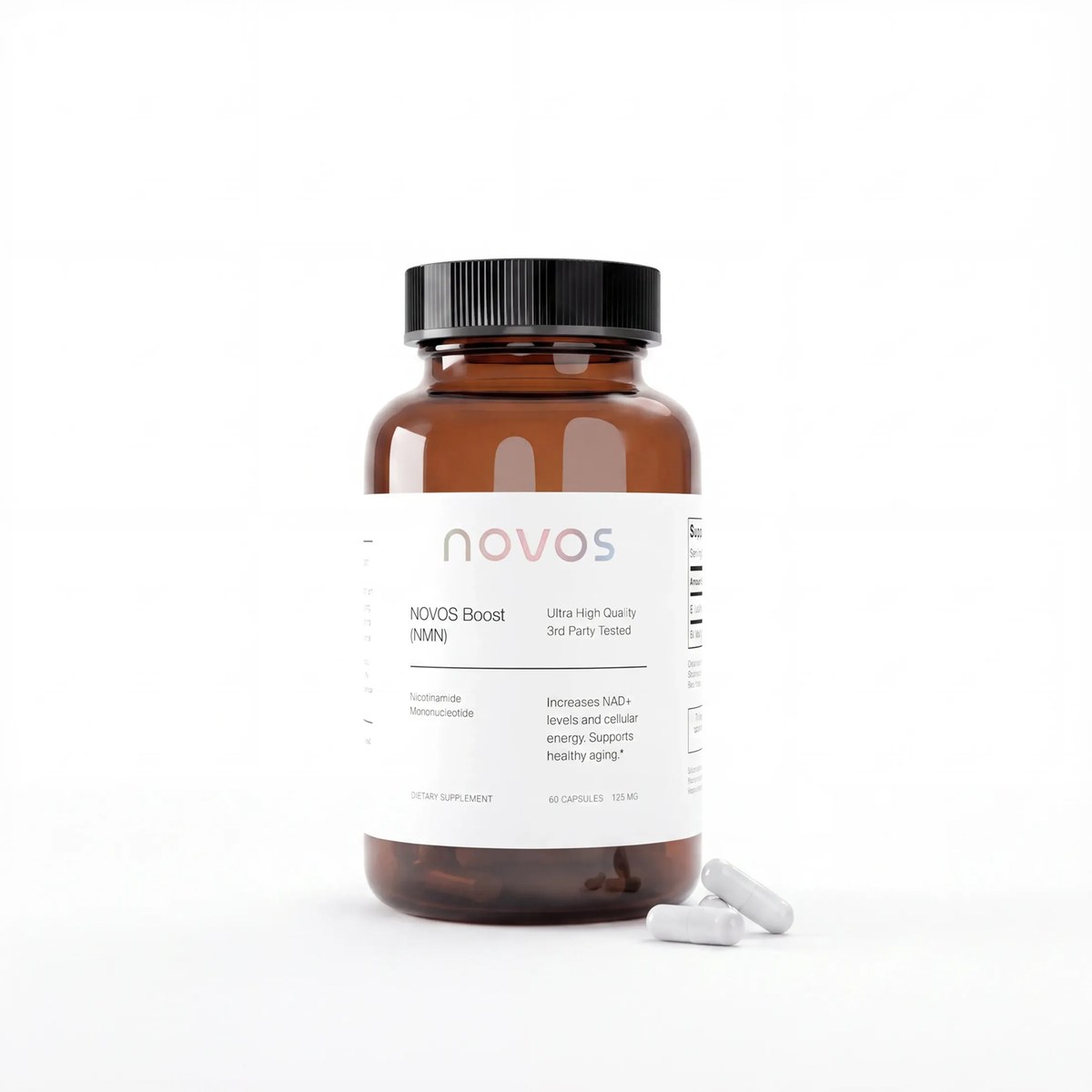
NOVOS Boost: Optional, not a GLP-1 necessity
Boost has the least direct role in this article. It provides NMN for focused NAD+ support. NMN has interesting human research related to NAD+ biology and cellular metabolism.
But Boost has not been shown to increase GLP-1 weight loss, prevent GLP-1-related lean-mass loss, reduce medication side effects or prevent weight regain.
If focused NAD+ support is already part of your longevity goals, Boost may fit that independent goal. You do not need to add it simply because you are taking a GLP-1.
Which NOVOS product fits which part of the journey?
| What you’re trying to support | Best NOVOS fit | Why | Important limitation |
|---|---|---|---|
| Protein intake | NOVOS Bar | 15 g complete plant protein per Bar | Does not replace an individualized daily protein target |
| Micronutrient density | NOVOS Bar | 21 essential vitamins and minerals at 50% DV | Does not treat a diagnosed deficiency |
| Fiber intake | NOVOS Bar | 7 g dietary fiber | GI tolerance varies |
| Muscle-building nutrition | NOVOS Bar | Complete protein alongside an appropriate training program | Has not been clinically shown to prevent GLP-1-related lean-mass loss |
| Gut microbiome support | NOVOS Vital | Chicory-root inulin provides targeted prebiotic support for bifidobacteria | Does not treat constipation or other GLP-1 GI effects |
| Skin quality | NOVOS Core | Skin-support ingredients plus preliminary finished-formula firmness data | Does not restore facial fat or prevent “Ozempic face” |
| Broader healthy aging | NOVOS Core | Foundational longevity formula with separate finished-product human research | Not a GLP-1 efficacy enhancer |
| Focused NAD+ support | NOVOS Boost | NMN-focused product | No established GLP-1-specific benefit |
| Preventing weight regain | None | No NOVOS product has demonstrated this | Long-term medical and lifestyle management still matter |
| Making a GLP-1 medication work better | None | No NOVOS product has established this benefit | Do not imply drug enhancement |
| Treating GLP-1 side effects | None | NOVOS products are not treatments for medication adverse effects | Persistent symptoms belong with the treating clinician |
Protein intake
Best fit: NOVOS Bar
Why: 15 g complete plant protein per Bar
Important limitation: Does not replace an individualized daily protein target
Micronutrient density
Best fit: NOVOS Bar
Why: 21 essential vitamins and minerals at 50% DV
Important limitation: Does not treat a diagnosed deficiency
Fiber intake
Best fit: NOVOS Bar
Why: 7 g dietary fiber
Important limitation: GI tolerance varies
Muscle-building nutrition
Best fit: NOVOS Bar
Why: Complete protein alongside an appropriate training program
Important limitation: Has not been clinically shown to prevent GLP-1-related lean-mass loss
Gut microbiome support
Best fit: NOVOS Vital
Why: Chicory-root inulin provides targeted prebiotic support for bifidobacteria
Important limitation: Does not treat constipation or other GLP-1 GI effects
Skin quality
Best fit: NOVOS Core
Why: Skin-support ingredients plus preliminary finished-formula firmness data
Important limitation: Does not restore facial fat or prevent “Ozempic face”
Broader healthy aging
Best fit: NOVOS Core
Why: Foundational longevity formula with separate finished-product human research
Important limitation: Not a GLP-1 efficacy enhancer
Focused NAD+ support
Best fit: NOVOS Boost
Why: NMN-focused product
Important limitation: No established GLP-1-specific benefit
Preventing weight regain
Best fit: None
Why: No NOVOS product has demonstrated this
Important limitation: Long-term medical and lifestyle management still matter
Making a GLP-1 medication work better
Best fit: None
Why: No NOVOS product has established this benefit
Important limitation: Do not imply drug enhancement
Treating GLP-1 side effects
Best fit: None
Why: NOVOS products are not treatments for medication adverse effects
Important limitation: Persistent symptoms belong with the treating clinician
Take the win. Build on it.
There is a strange temptation in health to treat every intervention as an isolated project. First lose the weight. Then deal with fitness. Then think about nutrition. Then perhaps sleep. Then cardiovascular health. Then muscle. Then aging.
But successful GLP-1 therapy can create something unusually powerful: momentum. The scale is changing. Your clothes fit differently. Movement may become easier. You have visible evidence that your behavior and treatment are producing a result.
Use that moment.
Lift weights. Eat enough protein. Make the smaller meals nutrient dense. Build cardiovascular fitness. Get your sleep right. Know your blood pressure. Know your lipids. Pay attention to your strength, not only your weight. Think about what you want your body to be capable of five, ten and twenty years from now.
The medication may have made eating less easier. That creates space to work on everything else.
“The scale can be the catalyst. It should not be the finish line.”
If you’re taking a GLP-1, where should NOVOS fit?
Start with NOVOS Bar if nutrition is the immediate problem
When food intake becomes smaller, Bar directly addresses the problem of making each eating opportunity more nutritionally useful. 15 g complete protein. 7 g fiber. 21 essential vitamins and minerals at 50% DV. Real-food ingredients. Five additional longevity ingredients.
Add NOVOS Core if the goal has become bigger than weight loss
Core fits the person who is thinking: “I’m finally improving my weight. Now I want to build the rest of my health.” It is the broader NOVOS longevity foundation.
Consider NOVOS Vital if targeted prebiotic and daily-system support matter to you
Vital provides chicory-root inulin for targeted prebiotic support alongside its approved eye, skin and brain positioning. It is not a GLP-1 side-effect product.
Boost is optional
Choose Boost if focused NMN and NAD+ support are already independent priorities. Do not add it because you think every GLP-1 user needs it.
GLP-1 nutrition
When every bite counts, build more into it.
15 g complete protein. 7 g fiber. 21 essential vitamins and minerals at 50% DV. Real-food ingredients. Five longevity ingredients. One nutrient-dense eating occasion.
GLP-1 therapy can make an extraordinary amount of weight loss possible. The challenge is to make the transformation about more than losing pounds.
Lose excess fat. Give your muscles a reason to stay. Eat enough protein. Make smaller meals count. Pay attention to nutrient density. Work with your stomach rather than against it. Take visible changes in your hair or skin seriously without assuming every change has a supplement solution. And use the momentum to build the cardiovascular fitness, strength, nutrition and daily habits that matter long after the rapid-loss phase ends.
Losing weight can be the beginning of the health project.
Not the end.
References
The studies behind this article
[1]Lean Mass Changes With Incretin Therapy Versus Lifestyle Intervention: A Systematic Review and Meta-Analysis of Randomised Controlled Trials
Eisa N, Barood O. Diabetes, Obesity and Metabolism. 2026;28(6):4818-4827.
DOI: 10.1111/dom.70666
Supports: 20 randomized trials with 15,782 participants; lean mass accounting for approximately 25% to 39% of total weight loss across incretin therapies (semaglutide 35.2%, tirzepatide 25.4%, liraglutide 26.8%); resistance-training lifestyle interventions showing the most favorable proportional lean-mass profile.
Important: lean mass is not synonymous with skeletal muscle.
View paper ↗[2]Lean Mass and Musculoskeletal Preservation in GLP-1-Based Obesity Treatment: Nutrition, Exercise, Supplementation, and Monitoring Strategies
Šantić R, Martinović L, Pavlović N, et al. Metabolites. 2026;16(6):364.
DOI: 10.3390/metabo16060364
Supports: Quality of weight loss; the distinction between lean mass and skeletal muscle; protein-first nutritional strategy; resistance exercise; nutritional adequacy; muscle and functional preservation; a food-first approach.
View paper ↗[3]Micronutrient and Nutritional Deficiencies Associated With GLP-1 Receptor Agonist Therapy: A Narrative Review
Urbina J, Salinas-Ruiz LE, Valenciano C, Clapp B. Clinical Obesity. 2026;16(1):e70070.
DOI: 10.1111/cob.70070
Supports: Concerns about nutritional adequacy during GLP-1 therapy, including vitamin D, iron, calcium, vitamin B12 and protein, plus the importance of individualized assessment.
Important limitation: the evidence base is predominantly observational and does not establish that GLP-1 therapy itself directly causes every deficiency observed.
View paper ↗[4]GLP1 and GIP Receptor Agonists: Effects on the Gastrointestinal Tract and Management Strategies for Primary Care Physicians
Saha B, Kamalumpundi V, Codipilly DC. Mayo Clinic Proceedings. 2025.
DOI: 10.1016/j.mayocp.2025.09.017
Supports: Nausea, vomiting, diarrhea, constipation and delayed gastric emptying; GI tolerance; the importance of dietary management and hydration.
View paper ↗[5]GLP-1 therapies and hair loss: A systematic review of current evidence and implications for counseling
Gupta AK, Teasell EM, Economopoulos V, Mirmirani P. Science Progress. 2026;109(2).
DOI: 10.1177/00368504261444578
Supports: An emerging association between GLP-1 therapies and hair loss; reported alopecia patterns; possible contribution from rapid weight loss and telogen effluvium.
Important: medication causality and the exact mechanism are not definitively established.
View paper ↗[6]Radiographic Midfacial Volume Changes in Patients on GLP-1 Agonists
Sharma RK, Vittetoe KL, Barna AJ, et al. Otolaryngology-Head and Neck Surgery. 2025;173(2):360-366.
DOI: 10.1002/ohn.1209
Supports: Quantitative midfacial-volume changes; a median 9% reduction in total midfacial volume in the study; the relationship between weight-loss magnitude and superficial facial-volume loss; anatomical context for the popular “Ozempic face” discussion.
Important: retrospective cohort, n=20. Not every user experiences the same change.
View paper ↗[7]Semaglutide and Cardiovascular Outcomes in Obesity without Diabetes
Lincoff AM, Brown-Frandsen K, Colhoun HM, et al. New England Journal of Medicine. 2023;389(24):2221-2232.
DOI: 10.1056/NEJMoa2307563
Supports: The SELECT trial: 17,604 participants with established cardiovascular disease and overweight or obesity, but no diabetes; a 20% relative reduction in major cardiovascular events with semaglutide versus placebo.
Included because GLP-1 therapy itself can provide important cardiovascular benefit.
View paper ↗[8]Weight regain and cardiometabolic effects after withdrawal of semaglutide: The STEP 1 trial extension
Wilding JPH, Batterham RL, Davies M, et al. Diabetes, Obesity and Metabolism. 2022;24(8):1553-1564.
DOI: 10.1111/dom.14725
Supports: Approximately two-thirds of prior semaglutide-associated weight loss regained during one year after treatment withdrawal in the STEP 1 extension.
Important: this result does not generalize to every GLP-1 medication or every individual. Medication continuation or discontinuation decisions belong with the treating clinician.
View paper ↗This article is for educational purposes and is not intended to diagnose, treat, cure or prevent obesity, diabetes, medication side effects, nutritional deficiencies, muscle loss, hair loss or any other medical condition.
GLP-1-based therapies are prescription medications and should be used under the supervision of an appropriate healthcare professional. Do not change, pause, discontinue or adjust prescription medication based on this article.
Persistent vomiting, inability to maintain hydration, severe or persistent abdominal pain, significant nutritional difficulty, concerning hair loss or other symptoms should be discussed with an appropriate healthcare professional.
NOVOS products are not intended to increase the effectiveness of GLP-1 medications, treat their adverse effects or prevent weight regain. NOVOS Bar is food and is not intended to diagnose, treat, cure or prevent disease. NOVOS Core, Vital and Boost are dietary supplements and are not intended to diagnose, treat, cure or prevent disease.
These statements have not been evaluated by the Food and Drug Administration. These products are not intended to diagnose, treat, cure or prevent any disease.